A pet owner is the first to notice small changes. One morning, their dog walks very slowly. It scratches more than normal. Today, its eyes look a little sleepy. At first, these signs don’t seem dangerous. A lot of dog parents don’t pay attention to them because they think the dog is fine. They think the signs will go away soon. But these little signs often mean that dog is sick. Dogs are very good at hiding their pain, which is why knowing a dog health care guide is essential. They wag their tails and act happy even when they’re sick. Such behavior makes it easy to miss problems that come up early.
Regular care can keep big problems from happening. Daily checks find small changes early on. Getting help early stops diseases from getting worse. Good habits naturally keep you healthy in the long run. Simple routines can add many years to your dog’s life. Every day, healthy dogs have more energy. For a long time, they stay active, playful, and joyful.
👉 Quick Guide for Dog Owners
- 1 What is a dog health care guide?
- 2 How to Take Care of a Dog’s Health
- 3 Getting to Know the Basics of Dog Health Care
- 4 Every Pet Parent Should Do Daily Dog Health Checks
- 5 Common Dog Illnesses
- 6 Puppy Health Care Guide
- 7 Guide to Vaccination (US and Europe)
- 8 Health Care That Prevents Problems
- 9 Toxic foods that are common in homes in the US and Europe
- 10 Checklist for Regular Vet Care
- 11 Guide to the Health of Older Dogs
- 12 Basic First Aid for Dogs
- 13 Dog Health Care – (FAQs)
- 13.1 FAQ 1– What are the first signs that a dog is sick?
- 13.2 FAQ 2– What is the schedule for getting a dog vaccinated in the US?
- 13.3 FAQ 3– What is the schedule for puppy vaccinations in Europe?
- 13.4 FAQ 4– How often should dogs see the vet?
- 13.5 FAQ 5– What are the most common illnesses that dogs get?
- 13.6 FAQ 6– How can I check on my dog’s health at home?
- 13.7 FAQ 7– What foods are bad for dogs?
- 13.8 FAQ 8– How can I keep fleas and ticks away from my dog?
- 13.9 FAQ 9– What are the signs that my dog needs to see a vet right away?
- 13.10 FAQ 10– What should a dog’s daily health routine include?
- 14 A healthy dog lives longer
What is a dog health care guide?
A dog health care guide explains how to take care of a dog’s daily health, prevent common illnesses, and manage health needs at different life stages. It covers routine health checks, vaccinations, parasite prevention, nutrition basics, and early warning signs so dog owners can keep their pets healthy at every life stage.
How to Take Care of a Dog’s Health
Taking care of a dog’s health includes daily observation, proper nutrition, regular exercise, timely vaccinations, and preventive treatments. Understanding early signs of illness and following age-wise care helps dogs stay active, comfortable, and healthy throughout their life.
Getting to Know the Basics of Dog Health Care
Riya saw that her dog Bruno was acting strangely quiet one morning. He slowly walked to his bowl of food. He usually ran to eat with a lot of energy. She thought he was just sleepy. But she made the choice to keep a close eye on him. She saw small changes over the next few days, like how he panted a little after short walks and didn’t want to play with his favorite toy as much. These early observations helped her find a health problem before it got worse. Every dog parent needs to know the basics of health signs.
Temperature, pulse, and breathing are all vital signs
Stable vital signs are the first step to excellent dog health. The temperature of a dog stays in the normal range. A high temperature is often a sign of an infection. A low body temperature may signal shock or weakness. The pulse should stay steady and calm. When you’re in pain or stressed, your heart rate speeds up. Your breathing should stay calm and steady. Heavy breathing means you are in pain or are too hot. Breathing slowly can be a sign of weakness. Looking for these signs helps find problems early.
How dogs usually behave
Normal behavior is to stay active and interested. Dogs that are healthy like to play and move around. They respond quickly to noises. Their eyes stay bright all day. Dogs that are healthy are interested in food. They greet their family with a lot of energy. A sudden change could mean getting sick. Low energy can mean that something is wrong. Being restless can also mean being uncomfortable. Knowing what normal behavior is makes it easier to spot quickly.
Health differences based on breed
Different breeds have different levels of risk. Some breeds have joint problems early on. Some people have trouble breathing in the heat. Small breeds often have problems with their teeth. Hip problems are more common in big breeds. Breeds with long backs have problems with their spines. Breeds with flat faces have trouble with airflow. Owners should carefully look into their breed’s specific needs by understanding basic dog health care. Knowing about breeds helps you plan for better health.
Dogs that live inside vs. outside
Dogs that live inside usually have fewer parasites. Every day, they like being in controlled spaces. But dogs that live inside can gain weight. Dogs that live outside are exposed to more things every day. They often come across fleas and ticks. Dogs that live outside use up more energy. The weather has a big effect on dogs that live outside. The cold stresses out dogs with thin coats. Hot weather stresses out dogs with thick coats. Knowing someone’s lifestyle helps you plan the right care.
Every Pet Parent Should Do Daily Dog Health Checks
Checking things every day helps you see small changes early. A lot of health problems start out quietly. Watching your dog every day helps you act quickly. It only takes a few minutes to do simple checks. These habits will keep your dog healthy for a long time.
Ears, Nose, and Eyes
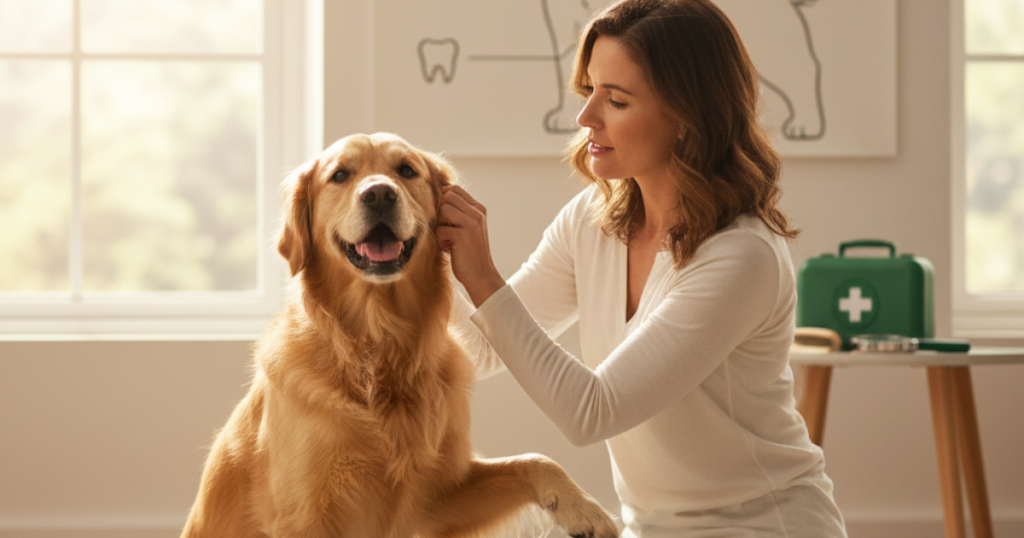
Every day, your dog’s eyes should look clear. They shouldn’t have any discharge or redness. Cloudiness could mean that there are bigger problems. The nose should stay smooth and wet. Crusts are a sign of irritation or dehydration. Thick discharge is a common sign of an infection. Ears should never smell bad. A strong smell means there are yeast or bacteria. If you see redness or are always scratching, you are in pain. A quick look at the face helps you catch issues early.
Skin and Coat
Healthy skin stays smooth and doesn’t flake. A shiny coat means that the animal is getting good food. Fleas leave little black spots on the skin. Ticks attach to the skin near the neck and ears. When skin gets dry, dandruff shows up. Bald spots are often a dog allergy symptom or an infection. If you keep scratching, it means you’re really irritated. Red bumps could be signs of parasite bites. Checking your skin every day keeps it safe early on.
Skin Issues and Their Likely Causes
| Skin Issue | Likely Cause | Common Signs |
| Flea bites | Fleas | Black specks, itching, red bumps |
| Tick irritation | Ticks | Attached tick, swelling, redness |
| Dry flaky skin | Dryness | Dandruff, rough patches, dull coat |
| Bald patches | Allergies | Hair loss, redness, constant licking |
| Red itchy spots | Food allergies | Face itching, belly redness, rashes |
| Circular hair loss | Fungal infection | Round bald spots, scaly borders |
| Thickened irritated skin | Mites or mange | Intense itching, crusting, hair loss |
| Red bumps or pustules | Bacterial infection | Pimples, yellow crusts, bad odor |
Teeth and Keeping Your Mouth Clean
You need to take care of your dog’s mouth every day. Teeth that are healthy look clean and strong. Bad breath is a sign of dog dental health care issues. Their gums should stay pink and healthy. Weakness or illness can cause pale gums. Inflamed gums are bright red. Tartar builds up over time and hurts teeth. Chewing with loose teeth hurts a lot. Dogs often hide their dental pain. Daily checks keep your mouth healthy for a long time.
Paws and Nails
Your dog’s paws get stressed out quickly. Dryness causes pads to crack. Cuts show up after rough play outside. Redness means that something is bothering you or that you have an infection. Many types of dogs have fast-growing nails. Long nails change the way you walk. This change puts more stress on the joints. Sharp pain comes from broken nails. Keeping your paws clean stops a lot of small injuries. Regular checks make it safer to move.
Behavior, Weight, and Appetite
Daily habits show early signs of illness. Sudden weight loss is often a sign of illness. Gaining weight means there are problems with your lifestyle. When your stomach hurts, you don’t want to eat. Not eating shows that you are in pain or discomfort. Changes in behavior happen very quickly. Having low energy means there are deeper problems. If you suddenly feel restless, it could be a sign of stress or anxiety. Moving slowly shows that there are problems with the joints. Daily observation helps you act quickly.
Behavior Changes & Possible Health Clues
| Behavior Change | Possible Health Clue |
| Sudden lethargy | Infection, dehydration, fever, pain |
| Excessive sleeping | Hypothyroidism, aging, low energy due to illness |
| Loss of appetite | Digestive issues, dental pain, stress |
| Increased appetite | Diabetes, nutrient deficiency, worms |
| Irritability or aggression | Pain, anxiety, neurological issues |
| Withdrawal from family | Depression, stress, chronic discomfort |
| Restlessness or pacing | Anxiety, heart issues, discomfort |
| Limping or slow movement | Joint pain, injury, arthritis |
Common Dog Illnesses
Dogs across the US and many European countries are exposed to several common diseases throughout their lives. These dog diseases symptoms can spread through contact, waste, bites, insects, and even the air. Some dogs show signs of illness right away, while others hide them for days. Many illnesses get worse quickly if they aren’t treated right away. Vaccines stop a number of serious diseases. Getting treatment early helps people get better faster. Every dog owner can protect their dog better if they know about these diseases. Regular checks help find problems before they get worse. As their parents, we can help keep dogs healthy by noticing problems early and look for early signs your dog needs a vet.
Parvovirus
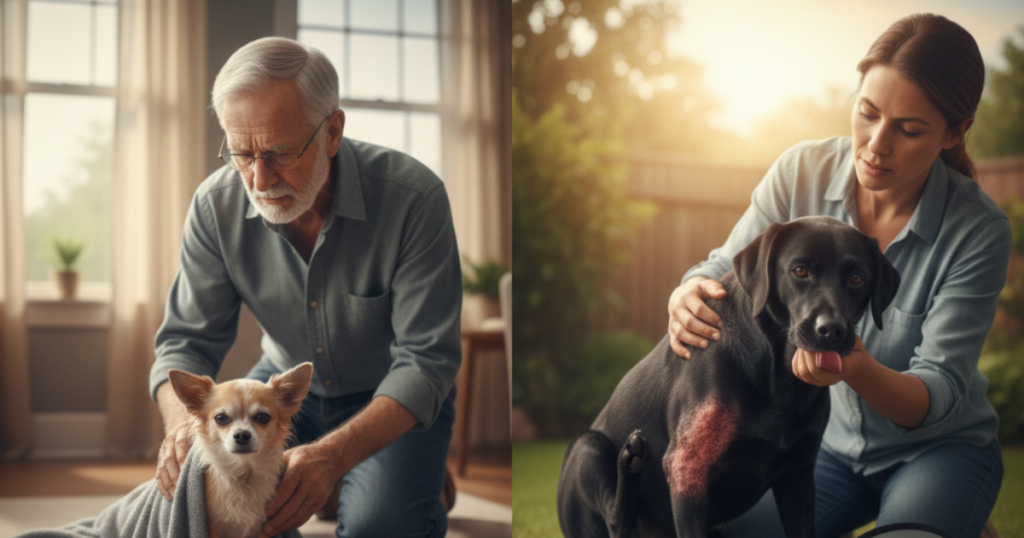
Infected waste and dirty surfaces are how parvovirus spreads. This disease is easy for puppies to get because their immune systems aren’t very strong. The virus quickly attacks the lining of the stomach and intestines. Severe vomiting and bloody diarrhea are some of the symptoms. Dogs quickly lose energy and stop eating. Dehydration can become dangerous in just a few hours. If you don’t get help right away, this disease can kill you. An annual vet check-up helps detect and treat the disease early. Vaccination stops most cases and gives strong protection. Getting treatment early greatly improves survival and lowers the risk of complications.
Distemper
Infected dogs spread distemper through droplets. The virus attacks the lungs, stomach, and nervous system. Coughing and a low-grade fever are the first signs. Dogs often lose their appetite and energy. As the disease gets worse, you may start to have seizures and twitching. Without early help, distemper can kill. A lot of dogs have nerve damage that lasts a long time. Getting vaccinated gives you strong protection for the rest of your life. Finding the problem early leads to better results and fewer serious problems. In group spaces, excellent hygiene lowers the risk.
Rabies
Rabies spreads when infected animals bite other animals. The virus quickly attacks the brain and nervous system. Confusion and fear are early signs. Dogs may be aggressive or restless. Weakness and paralysis are later signs. Once symptoms show up, rabies is always deadly. In most places, getting vaccinated is still required by law. It offers a lot of protection for families and pets. Getting your pet to the vet right away after a suspicious bite can help keep them from getting sick. Pet owners should have their pets’ rabies shots updated regularly.
Kennel Cough
Kennel cough spreads quickly in groups and places with many people. It usually affects dogs that go to daycare, stay at a boarding kennel, or go to the park. The disease makes the throat and airways very uncomfortable. A loud, harsh cough is one of the symptoms. When dogs cough, they may gag or retch. In some cases, there is a mild fever. Usually, the cases are mild and get better with rest. Vaccination is a good way to protect social dogs. Treatment works quickly and stops the spread of the disease. Early treatment keeps the cough from turning into pneumonia.
Lyme Disease
Infected ticks spread Lyme disease. This disease occurs frequently in many European countries and several states in the US. The disease gets into the blood and harms organs and joints. Stiff walking and sore joints are two of the symptoms. Pain may make dogs resist moving. Fever happens a lot in the early stages. Your appetite might slowly go down. Preventing ticks greatly lowers the risk and protects long-term health. Getting treatment early makes recovery faster and lessens long-term damage. Regular checks help identify ticks that are attached early.
Heartworm Disease
Mosquito bites spread heartworm disease. A lot of people in the US have it, especially in warm states. The worms grow inside the heart and the blood vessels that are close to it. The first signs are a mild cough. Dogs get tired quickly when they walk or play. Over time, breathing gets harder. Heartworm that isn’t treated can kill you and cause heart failure. The treatment takes a long time and needs a lot of rest. Heartworms are completely stopped by monthly prevention. Prevention is still easier, safer, and less expensive than treatment.
Allergies to food and skin
Food, plants, dust, or chemicals can make dogs allergic. Itching and redness are common dog skin problems symptoms. Dogs can scratch until they get hurt. Food allergies can make your stomach hurt and cause ear infections that won’t go away. During flare-ups, some dogs lose patches of hair. Allergies need long-term care and management. Finding out what causes symptoms helps control them. Allergy tests or elimination diets may be suggested by vets. The treatment includes medicines, dietary changes, and proper skin care. Taking action early stops allergies from getting worse.
Hip Dysplasia
Hip dysplasia affects how joints grow in puppies. This condition happens more often in big breeds. Puppies may be stiff when they move around at first. As the joint becomes unstable, dogs have trouble walking. It hurts to run and jump. Keeping your weight in check can help ease joint pressure. The best supplements for dogs help keep joints strong and flexible. In very bad cases, surgery may be needed to bring back comfort. Finding out what’s wrong early helps control symptoms better. Regular exercise helps your joints move better.
Diseases of the Teeth
Dental diseases hurt the gums, teeth, and health of the whole body. Tartar builds up slowly along the gumline. Bad breath starts early and doesn’t go away. Pain and swelling are caused by gum infections. During the later stages, teeth start to come loose. Dogs might not want to chew because it hurts. Cleaning your teeth stops serious infections and tooth loss. Taking care of your mouth early on is good for your health because bacteria in your mouth can harm your major organs. Brushing your teeth every day and having your vet clean them keeps your mouth strong and healthy.
Puppy Health Care Guide
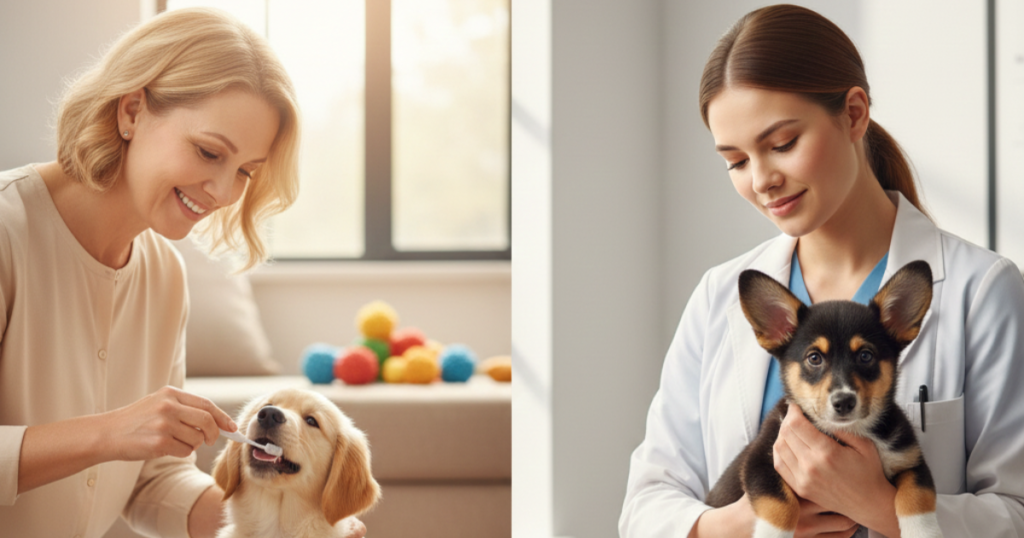
During the first few months, puppies need extra care. Their bodies grow really quickly. During this time, their immune system stays weak. They need the right food and dog health tips to stay healthy. Puppies also get sick very quickly. Early on, small symptoms show up and need to be noticed right away. During growth phases, their energy levels change a lot. A steady healthy dog routine helps a puppy grow up safely. This guide helps parents learn about the early care needs of their children. A healthy adult dog comes from good early care.
Schedule for Growth
Different puppies grow at different speeds. Small breeds grow faster than big ones. Their bones grow quickly in the first few weeks. Food and play help muscles grow. With the right food, weight goes up steadily. Slow growth may be a sign of health problems. Growing too fast puts stress on developing joints. Regular checks on growth help make sure it happens safely. During early visits, vets keep track of growth. A clear growth schedule makes it easier to plan. A growth chart can show what weight ranges are best.
Puppy Growth Chart for small, medium, and large breeds:
| Age | Small Breed (kg/lbs) | Medium Breed (kg/lbs) | Large Breed (kg/lbs) |
| 6 weeks | 1–2 kg / 2–4 lbs | 2–4 kg / 4–9 lbs | 4–6 kg / 9–13 lbs |
| 8 weeks | 2–3 kg / 4–6 lbs | 4–6 kg / 9–13 lbs | 6–8 kg / 13–18 lbs |
| 12 weeks | 3–4 kg / 6–9 lbs | 6–9 kg / 13–20 lbs | 10–12 kg / 22–26 lbs |
| 16 weeks | 4–5 kg / 9–11 lbs | 9–12 kg / 20–26 lbs | 14–18 kg / 31–40 lbs |
| 6 months | 5–6 kg / 11–13 lbs | 12–18 kg / 26–40 lbs | 22–28 kg / 48–62 lbs |
| 12 months | 5–7 kg / 11–15 lbs | 18–22 kg / 40–48 lbs | 30–38 kg / 66–84 lbs |
Feeding Schedule
Puppies need to eat a lot every day. Their stomachs stay small for the first few months. Eating small meals helps with digestion and gives you more energy. Feeding times should always be the same. Changes that happen quickly can upset the stomach. Puppy food helps bones and muscles grow. Adult food doesn’t have the nutrients that are needed. Overeating can lead to long-term joint problems. Not eating enough slows down healthy growth. There should always be clean water available. A feeding chart table helps parents plan what to eat.
Puppy Feeding Schedule Table
| Puppy Age | Meal Frequency |
| 6–12 weeks | 4 meals |
| 3–6 months | 3 meals |
| 6–12 months | 2 meals |
Early Signs to Look Out For
Puppies get sick quickly. Loose stools are a sign of stomach problems early on. If you vomit a lot, it could be a sign of an infection or parasites. If you cough a lot, it could be a sign of breathing problems. Weakness or fever can make your eyes look dull. Low energy can be a sign of more serious health problems. People who skip meals often feel bad. If your belly is swollen, it could mean you have worms or trouble digesting food. Heavy scratching could mean you have an infection or allergies. Any sudden change in behavior needs to be looked into. Taking action early keeps young puppies safe.
Schedule for Puppy Vaccines
During the first few months, puppies need a lot of shots. Their immune system stays weak until they get enough doses. Vaccines keep puppies from getting sick and dying. Vaccination schedules start early in puppyhood. Europe’s timing is similar, but there are some small differences. Vaccines happen again every few weeks. Final boosters help keep immunity strong over time. Regular visits to the vet keep schedules on track. A chart makes it easy for parents to see the schedule.
Puppy Vaccine Schedule (US vs Europe)
| Age | US Schedule | Europe Schedule |
| 6–8 weeks | DHPP | — |
| 8 weeks | — | DHPP |
| 10–12 weeks | DHPP + optional Bordetella | DHPP + Lepto |
| 14–16 weeks | DHPP + Rabies | DHPP + Rabies |
| 12 months | DHPP booster + Rabies booster | DHPP booster + Rabies booster |
Schedule for Deworming
Early on, puppies need to be dewormed often. Young puppies can easily acquire worms. Worms are very bad for growth and digestion. Usually, deworming starts at two weeks. It happens every two weeks for three months. Thereafter, giving puppies monthly doses keeps them safe. Stool tests indicate that there are no worms. Deworming also lowers the risk of infection in people. A deworming table makes it easy to keep track of dates.
How to Keep Fleas and Ticks Away from Puppies
Parasites pose a significant threat to puppies. Fleas make young puppies anemic. Ticks quickly spread diseases that can be deadly. The skin of a puppy stays sensitive for the first few months. You can only use things that are safe for puppies. Some things are still dangerous for young puppies. Based on age, vets suggest safe choices about these dog diseases symptoms. Spot-on drops keep older puppies safe. Very young puppies do well with gentle shampoos. You should check for ticks every day. Preventing problems early on is beneficial for your long-term health.
Guide to Vaccination (US and Europe)
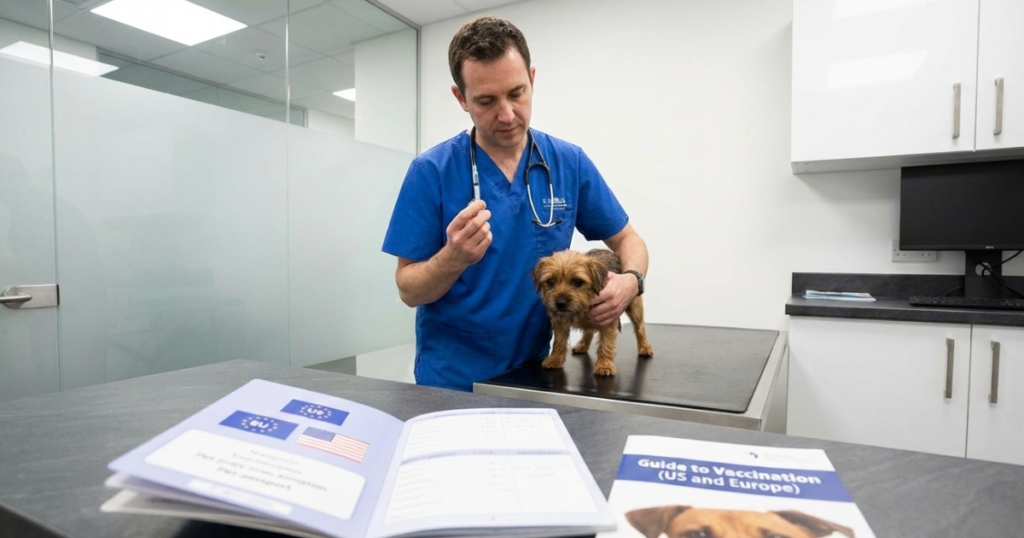
One of the best ways to keep dogs safe is to give them shots. They stop deadly diseases and save lives. Vaccines help the dog’s immune system learn how to fight off infections. Dogs of all ages, even puppies, need dog vaccination schedule. All dogs need some vaccines. Some are suggested based on where you live or how you live. The US and Europe have different schedules for vaccinations. Following the right schedule gives you the best protection. Not getting vaccines raises the risk of getting very sick. This part talks about core and non-core vaccines, their schedules, and how they differ from one region to another.
Vaccines that are important
Core vaccines keep dogs safe from common and serious diseases. The DHPP vaccine protects against parainfluenza, hepatitis, distemper, and parvovirus. Distemper can kill you by harming your nervous and respiratory systems. Parvovirus makes you throw up, have diarrhea, and lose fluids, especially in puppies. Hepatitis is a serious disease that affects the liver. Parainfluenza helps cause respiratory infections. All dogs in the US and Europe need DHPP.
Most countries require people to get the rabies vaccine. When infected animals bite you, you can get rabies. It hurts the brain and can kill you if you don’t get help. Vaccines keep both dogs and people safe. Most of the time, puppies get their rabies shots between the ages of 12 and 16 weeks. Depending on where you live, adults get boosters every one to three years. Dogs that live inside should also get rabies shots. Core vaccines are a must for the long-term health of your dog.
A table here can show core vaccines, diseases prevented, and schedule for US and Europe:
| Vaccine | Diseases Prevented | US Puppy Schedule | Europe Puppy Schedule | Adult Booster |
| DHPP | Distemper, Hepatitis, Parvo, Parainfluenza | 6, 9, 12 weeks | 8, 12, 16 weeks | 1 year, then every 3 years |
| Rabies | Rabies | 12–16 weeks | 12–16 weeks | 1–3 years |
Vaccines that aren’t core
The environment and lifestyle of your dog will determine which non-core vaccines they need. They are not required, but they are recommended for some risks.
Bordetella keeps kennel cough from happening. Dogs that go to daycare, get groomed, or stay in a kennel are more likely to get sick. Vaccination lowers the risk of getting sick and stops coughing outbreaks.
Leptospirosis protects against bacteria that live in water or soil. Dogs that drink still water or go hiking outside are more likely to be exposed. It can hurt the liver and kidneys.
Lyme disease keeps ticks that carry the Borrelia bacteria away. It happens more often in Europe and the northeastern United States. Fever and joint pain are two of the symptoms.
Influenza protects against strains of dog flu. Dogs that live in cities or are around other people are more likely to be exposed. It lowers the risk of serious respiratory infections.
Differences in the US and Europe Schedules
The US and Europe have slightly different vaccine schedules because of the diseases that are more common in each region and the laws there. In the US, puppies usually start getting their shots at 6 to 8 weeks old, and in Europe, they start at 8 weeks old. In both areas, DHPP and other core vaccines are given in three doses. Local laws may make the timing of rabies shots a little different. Non-core vaccines are based on the risk of disease in a certain area. To keep their immunity, adult dogs need boosters. Depending on the type of vaccine, boosters usually happen every one to three years.
Puppy Schedule Table
| Vaccine | US Schedule (weeks) | Europe Schedule (weeks) |
| DHPP | 6, 9, 12 | 8, 12, 16 |
| Rabies | 12–16 | 12–16 |
| Bordetella | 8–12 | 8–12 |
| Leptospirosis | 8–12 | 8–12 |
| Lyme | 9–12 | 12–16 |
| Influenza | Optional | Optional |
Adult Booster Table
| Vaccine | US Booster | Europe Booster |
| DHPP | 1 year, then every 3 years | 1 year, then every 3 years |
| Rabies | 1–3 years | 1–3 years |
| Bordetella | Every 6–12 months | Every 6–12 months |
| Leptospirosis | Yearly | Yearly |
| Lyme | Yearly | Yearly |
| Influenza | Yearly | Yearly |
Health Care That Prevents Problems
With the right preventive care, dogs stay healthy for longer. A lot of pet owners forget to prevent problems early on. Max, a fun-loving Labrador, began to scratch every day. His owner didn’t pay attention to it because he thought it was normal. Fleas caused skin infections in just a few weeks. Heartworm, ticks, and worms can hurt dogs without them knowing it. This could have been avoided with daily prevention and regular care with best diet for dog health. Preventive health keeps dogs healthy before they get sick. This part talks about important steps for dogs in the US and Europe.
How to Keep Fleas and Ticks Away
Fleas and ticks hurt dogs in a number of ways. They make you itch, lose hair, and get skin infections. They can spread Lyme disease and other infections in serious cases. Dogs in the US and Europe are exposed to the seasons. Dogs that live outside are more likely to get fleas and ticks than dogs that live inside. Both areas need monthly prevention. Pet owners can choose between collars, drops that go on the skin, or chewable tablets. Collars give protection that lasts for several months. Spot-on drops work quickly and go right to the parasites. Chewables protect your body from fleas and ticks. For families with more than one dog, combining treatments works best.
Table comparing flea and tick prevention options
| Type of Prevention | Duration of Protection | Ease of Use |
| Collar | 3–8 months (depends on brand) | Very easy; just put on collar |
| Spot-on Drops | 1 month per dose | Easy; apply to skin between shoulders |
| Chewable Tablets | 1 month per dose | Very easy; give like treat or food |
| Shampoos | Immediate; short-term | Moderate; needs bathing |
| Sprays | Few days to a week | Moderate; spray on coat and bed |
How to Keep Heartworms Away
Heartworm is a big problem in the United States. The dog parasite prevention is important which dangerously spreads through mosquito bites. The worms grow inside the heart for months. Symptoms show up late, but they get bad quickly.
If you have a cough, feel tired, and lose weight, you may have an infection. Monthly heartworm pills work well to stop heartworm. Every six months, some dogs need shots. In states with a lot of risk, it’s best to protect yourself all year long. Preventing something early on is cheaper and safer than treating it. Dogs that live outside or near water need extra care. Table suggestion: A schedule for preventing heartworm in puppies and adults, broken down by age and region.
Guide to Deworming
Deworming gets rid of intestinal parasites that are bad for dogs. Roundworms and hookworms are common in puppies. Adult dogs can get tapeworms, whipworms, and other worms that aren’t as common. Diarrhea, vomiting, weight loss, and a dull coat are some of the symptoms. Deworming starts for puppies when they are 2 to 3 weeks old. It happens every two to three weeks until they turn three months old. Depending on their lifestyle, adults should deworm every three to six months.
You should check on outdoor dogs and hunting breeds often. Deworming keeps the digestive system healthy and stops the loss of nutrients. A chart that shows the deworming schedule, including the type of worm, the age, and the time between treatments.
Supplements for Dogs
When a dog’s diet isn’t enough, supplements can help keep them healthy. Omega oils make your coat shinier and your skin healthier. They also help with joint inflammation. Supplements that support joints are good for older dogs or big breeds. Glucosamine and chondroitin make cartilage stronger and help you move better. Multivitamins make up for missing nutrients in dogs daily diet. Puppies, pregnant dogs, and older dogs get the most out of it. Supplements should never take the place of good food or vet care. Before you start using any new products, always talk to your vet. Using it regularly keeps dogs healthy and active for longer.
Toxic foods that are common in homes in the US and Europe
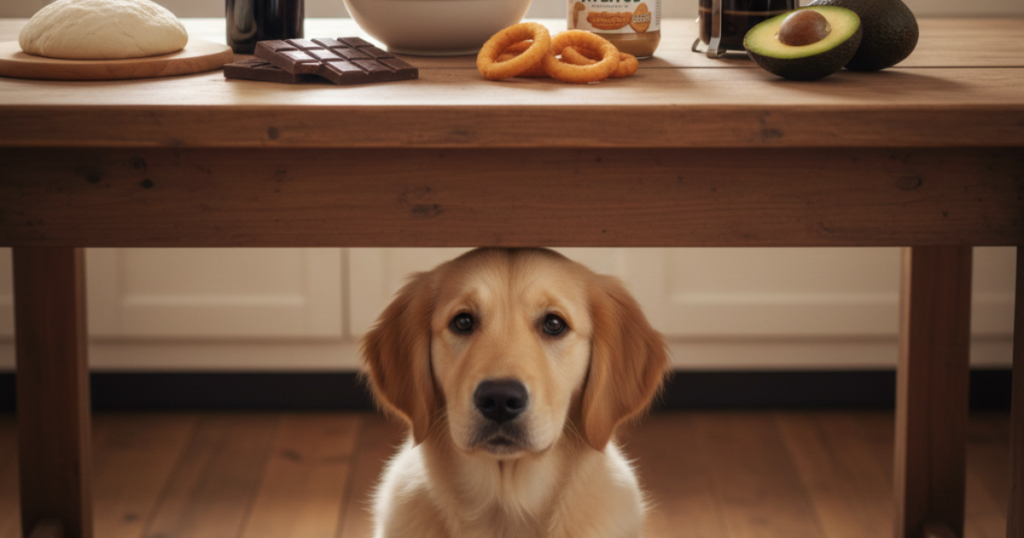
Dogs can’t digest theobromine, which is found in chocolate. Even a little bit can make you throw up, shake, or have heart problems. Grapes and raisins hurt the kidneys and can make them stop working. Onions, garlic, and leeks hurt red blood cells, which can lead to anemia. Even small amounts of alcohol can hurt the liver and brain. Xylitol, which is in sugar-free gum and candy, lowers blood sugar levels to dangerous levels. Macadamia nuts can make you weak, make you throw up, and make you shake. Caffeinated drinks and coffee make the heart and nervous system work too hard. Persin is found in avocados, and it can make dogs sick.
Always read the labels and don’t give dogs table scraps. So if pet owners wonder how to check dog health at home, it’s important to keep these foods out of reach.
What to do if your dog eats poisonous food
Step 1: Quickly look over the situation. Find out what your dog ate and how much. Keep track of when you ate. This helps the vet give the right care.
Step 2: Call your vet right away. Tell us what kind of food you give your dog, how much of it, and how much he or she weighs. The vet will tell you if you should make the dog throw up or take it to the clinic.
Step 3: Don’t make yourself throw up unless you’re told to. If you throw up, some foods, like sharp objects or chemicals, make the problem worse. Always do what a professional tells you to do.
Step 4: Make sure the dog stays calm and drinks enough water. Give them fresh water, but don’t make them drink it.
Step 5: If the vet says to, take them to a clinic. If you can, bring the packaging for the food. This helps the vet make a quick decision about treatment.
Step 6: Do what the post-emergency care instructions say. Some dogs need to be watched, given medicine, or put in the hospital. Watch their behavior, appetite, and bowel movements closely.
Step 7: Keep accidents from happening again. Put poisonous foods in cabinets or on high shelves. Tell family and guests about foods that aren’t safe.
Common Toxic Foods and Symptoms table for quick reference
| Food | Symptoms in Dogs | Severity |
| Chocolate | Vomiting, tremors, heart problems | High |
| Grapes/Raisins | Kidney failure, lethargy | High |
| Onions/Garlic | Anemia, weakness | Medium-High |
| Xylitol | Low blood sugar, seizures | High |
| Macadamia Nuts | Vomiting, tremors, weakness | Medium |
| Coffee/Caffeine | Rapid heart rate, tremors | High |
| Alcohol | Vomiting, drowsiness, coma | High |
| Avocado | Vomiting, diarrhea | Low-Medium |
Checklist for Regular Vet Care
- Yearly Health Exams: Make sure your dog gets a full physical every year.
- Eyes and Ears: Vets check for infections, discharge, or irritation on a regular basis.
- Check your weight and teeth: Keep an eye on your weight and look for tartar or decay on your teeth.
- Blood tests can find early signs of illness and organ problems before symptoms show up.
- Vaccines: Get all of your core and non-core vaccinations updated every year.
- Check for parasites: Check for fleas, ticks, and worms on a regular basis to keep infections from happening.
- Regular Visits: Regular trips to the vet can help keep small problems from getting worse.
Guide to the Health of Older Dogs
As dogs get older, their health needs change a lot. Bella, a Golden Retriever who is ten years old, began to slow down on walks. She had a hard time going up stairs and slept more than usual. Her owner saw that she was a little confused and stiff, but they thought it was just because she was getting older. Over time, small health problems became more obvious. To keep senior dogs comfortable and happy, they need extra care. Understanding senior dog health care tips can help avoid big problems and make them happier in the future.
Stiffness in the joints
Joint stiffness is common in older dogs. Most of the time, this happens to big, active breeds. If you are stiff, you may walk more slowly or have trouble going up stairs. Pain and swelling can happen in joints. Exercise that isn’t too hard keeps muscles strong. Glucosamine and other joint supplements can help with movement. Massage and warm bedding make you feel better. Stay away from activities that put a lot of stress on your joints. Early attention stops arthritis and injuries from becoming long-term.
Problems with vision
As people get older, their vision naturally gets worse. Dogs might bump into things or not know how far away they are. Cataracts or glaucoma could be the cause of cloudy eyes. Changes that happen all of a sudden need to be looked at by a vet right away. Older dogs may have trouble finding food or toys.
Loss of Hearing
Hearing loss usually happens slowly. Older dogs might not come when you call them. They might be more scared by loud noises that happen out of the blue. Training with visual cues makes it easier to talk to each other. Don’t yell, because it can make you feel stressed. Hearing aids are uncommon, but some dogs can learn to understand hand signals. Recognizing things early stops accidents and makes communication better.
Health of the organs
The heart, liver, and kidneys slowly stop working. Blood tests can find problems early on. Signs include being tired, throwing up, or needing to urinate a lot. A healthy diet is good for your organs. Prescription diets might help with long-term problems. Early treatment is possible with regular vet visits. Older dogs need to drink more water.
Managing Your Weight
As you get older, your metabolism slows down. It can be easy for dogs to gain weight. Without exercise, muscle mass goes down. Dogs that are overweight put stress on their hearts and joints. Dogs that are too thin may have problems with their organs. A balanced diet and controlling portions are very important. Regular checkups stop serious health problems.
Decline in cognitive function
Some older dogs get confused or forget things. They might get lost or forget their routines. It’s normal to feel restless at night. Early detection makes it possible to get supportive therapies.
Exercise and Comfort
Walking slowly keeps your muscles working. Playing for short amounts of time keeps you from getting stiff. To avoid getting hurt, don’t walk on floors that are slippery. Soft bedding and warm places to rest are beneficial for joints. Regular grooming makes them feel attractive. Taking care of their comfort makes them happier and less stressed.
| Symptom | Possible Cause | Recommended Action | Frequency of Check |
| Stiffness or difficulty walking | Arthritis or joint issues | Gentle exercise, joint supplements, vet visit | Weekly observation, vet every 6 months |
| Difficulty climbing stairs | Muscle weakness or joint pain | Short walks, ramps, soft bedding | Daily observation |
| Bumping into furniture | Vision decline, cataracts, glaucoma | Eye checkup, brighter lighting, vet exam | Monthly observation, vet annually |
| Not responding to calls | Hearing loss | Use hand signals, visual cues | Daily observation |
| Increased thirst or urination | Kidney or diabetes issues | Blood tests, diet adjustment, vet consultation | Monthly weight/urine check |
| Appetite changes | Organ issues, dental pain | Vet check, soft food, dental care | Weekly food monitoring |
| Weight gain or loss | Slower metabolism, organ issues | Adjust diet, monitor exercise | Weekly weight check |
| Nighttime restlessness | Cognitive decline or discomfort | Establish routines, provide comfort | Daily observation |
| Confusion or wandering | Cognitive decline | Mental stimulation, safe environment | Daily observation |
| Fatigue or low energy | Heart, liver, or general health issues | Vet check, balanced diet, gentle exercise | Weekly observation |
Basic First Aid for Dogs
Even the most careful dogs can have accidents. Bella, a Beagle who liked to explore, hurt her paw on glass while playing in the yard. Her owner was scared, but she knew how to give basic first aid. Every pet owner should know how to handle wounds and other emergencies. This part talks about how to clean a wound, what to do in an emergency, and when to see a vet right away.
Cleaning a Wound
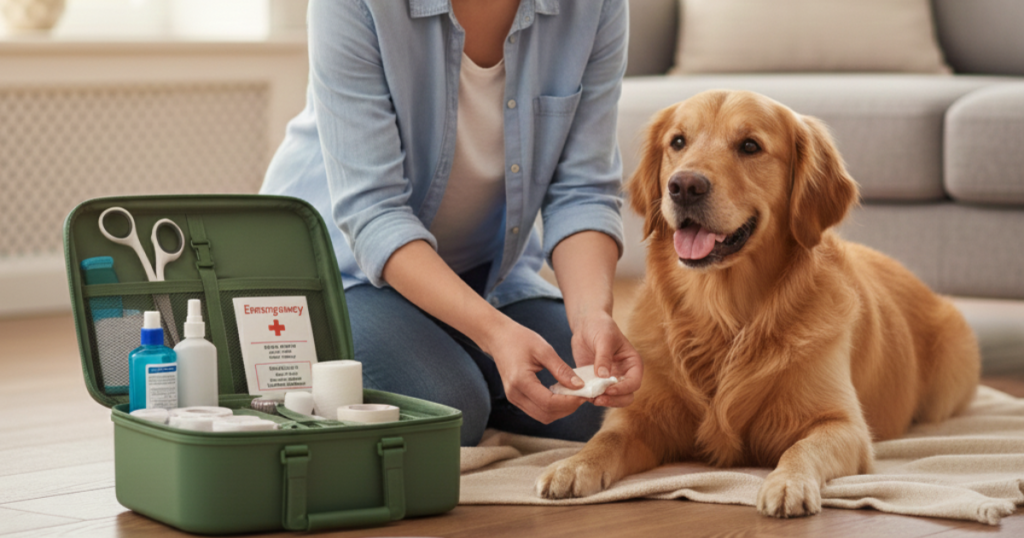
Dogs often get small cuts and scrapes. Always wash your hands first. If you need to, carefully trim the hair around the wound. Put on a thin layer of antibiotic cream that is safe for pets. If you need to, put a clean bandage over the wound. Change the bandage every day or if it gets wet. Checking the wound regularly speeds up the healing process.
Signs of an emergency
Some symptoms need to be looked at right away. Bleeding that doesn’t stop is dangerous. Having trouble breathing is a sign of serious distress. If you keep throwing up or having diarrhea, you could become dehydrated. A sudden collapse means there are serious problems inside. If your dog has seizures, you need to take them to the vet right away. Extreme tiredness or weakness is a cause for concern. If you get a bite or sting and your skin swells up a lot, you need to act fast. Finding these signs early on increases the chances of getting better.
When to Go to the Vet Right Away
In some cases, you need professional help right away. Deep cuts, puncture wounds, or bites can get infected very quickly. If you have trouble breathing, are choking, or have blue gums, you need to get help right away. If you think someone has been poisoned or eaten poisonous food, you need to get help right away. Severe allergic reactions can happen quickly and can kill you. You need to go to a clinic if you have uncontrolled bleeding. If someone suddenly falls, has a seizure, or hurts their back, they need help right away. When you have serious symptoms, it’s best to be safe than sorry. Early care from a vet can save lives.
Dog Health Care – (FAQs)
Every dog parent has small questions that come up almost daily.These simple answers help you understand what’s normal, what’s not, and when it’s time to act.
Think of this section as a quick health check for your dog’s everyday life.
FAQ 1– What are the first signs that a dog is sick?
Ans– Low energy, not wanting to eat, or strange behavior are some early signs. Dogs might cough, throw up, or scratch too much. Finding these early signs of dog illness helps stop serious problems.
FAQ 2– What is the schedule for getting a dog vaccinated in the US?
Ans– Puppies get their first shots between the ages of 6 and 8 weeks. DHPP and rabies are two of the most important vaccines. Adults get boosters every year or as directed by their vet.
FAQ 3– What is the schedule for puppy vaccinations in Europe?
Ans– European puppies have a schedule that is mostly the same, but there are some small differences between regions.
FAQ 4– How often should dogs see the vet?
Ans– At least once a year, dogs need to see a vet. Puppies need to go to the vet more often when they are getting their shots. For early detection, older dogs may need to see the vet every six months.
FAQ 5– What are the most common illnesses that dogs get?
Ans– Parvovirus, distemper, rabies, and heartworm are some of the most common diseases. Allergies, problems with teeth, and hip dysplasia are also common. Being aware and getting vaccinated greatly lowers risks.
FAQ 6– How can I check on my dog’s health at home?
Ans– Every day, watch how they act, what they eat, and how much energy they have. Regularly check your dog’s eyes, ears, coat, paws, and teeth. Finding problems early saves lives and stops big health problems from happening.
FAQ 7– What foods are bad for dogs?
Ans– Grapes, raisins, onions, garlic, alcohol, and xylitol are all bad for you. Even tiny amounts can be very bad for your health. Always keep these foods out of reach.
FAQ 8– How can I keep fleas and ticks away from my dog?
Ans– Use collars that last a month, drops that go on the spot, or chewable tablets. Regular grooming and clean bedding lower the risk. During busy times of the year, outdoor dogs may need extra care.
FAQ 9– What are the signs that my dog needs to see a vet right away?
Ans– If someone is throwing up a lot, having trouble breathing, passing out, or bleeding uncontrollably, they need help right away. If you suddenly feel weak or have seizures, you need to get help right away. Quick care from a vet could save their life.
FAQ 10– What should a dog’s daily health routine include?
Ans– Look at your dog’s eyes, ears, coat, teeth, and paws every day. Keep an eye on their appetite, behavior, and energy levels. A healthy routine includes regular walks, good food, and grooming.
A healthy dog lives longer
Every home is happier with a healthy dog. Vaccines, flea and heartworm prevention, and deworming lower the risk of getting sick. These steps stop serious illness from happening in the first place. Dogs and their owners are happier when they have healthy routines.
Regular visits to the vet are still very important for long-term health. Annual checkups, blood tests, dental cleanings, and booster shots for vaccinations help find problems early. Finding problems early saves lives and lowers treatment costs. It’s also helpful to notice small changes in behavior or physical appearance at home. Owners and dogs both find it easier to care for them when they have a set schedule.
In short, your love and care for your dog are reflected in their health. Daily care, taking precautions, and regular checks all help people live longer. Your bond gets stronger the happier and healthier your dog is. Every pet parent can make sure their dog has many happy years by being proactive.