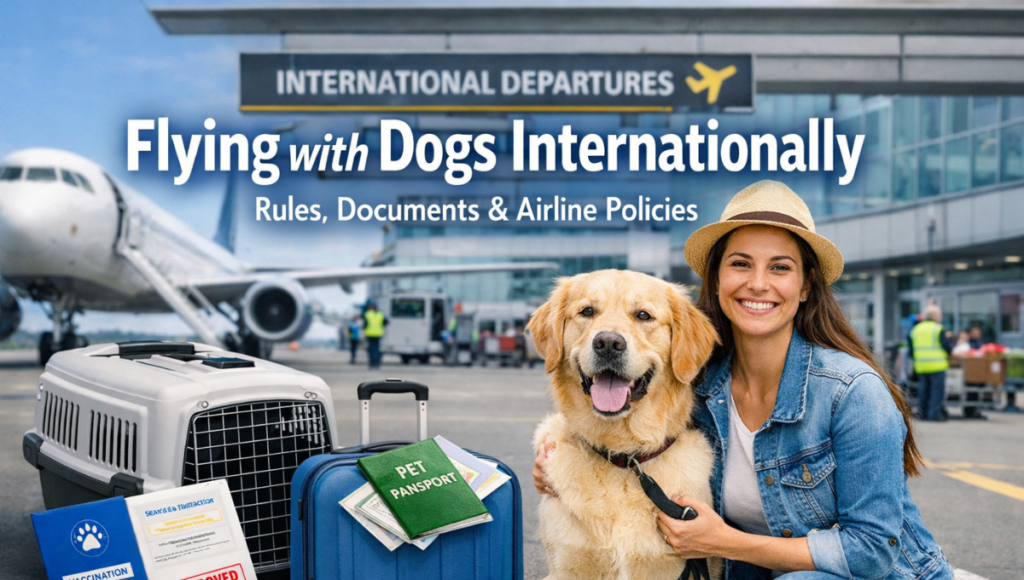
Traveling with a dog requires planning ahead, packing the right essentials, and following transport rules specific to your travel type. This complete dog travel guide covers everything from car trips and flights to international travel, hotel stays, and safety — so every journey with your dog stays calm, safe, and genuinely enjoyable.
Whether you are planning a short road trip, a cross-country flight, or international relocation with your dog, this guide gives you a clear, practical handbook covering documents, packing lists, safety tips, and common mistakes to avoid.
The best way to travel with a dog is to plan ahead, pack essential supplies, including food, water, a leash, and comfort items, carry the right health documents, and follow transport-specific rules, whether by car, plane, train, or internationally.
What you will learn in this guide:
- How car, flight, train, and international travel compare for dogs
- A complete packing list for every type of trip
- Step-by-step guidance for long-distance road trips
- Flying with a dog — documents, preparation, and airline rules
- Hotel stays and essential safety tips
- Common dog travel mistakes and how to avoid them
- A printable dog travel checklist for stress-free packing
I still remember the first time I took my dog on a trip. He sat by the door and looked at my suitcase with interest. I was excited, but also confused. I kept looking at his leash, bowl, toys, papers, and more. I was worried about rules, safety, and comfort. I asked myself a lot of things. What do I need to bring? What papers do I need? What will he do on the trip?
I learned something important that day. It looks easy to travel with a dog, but you need to plan ahead.
Dogs cannot adapt as quickly as people do. They need us for even the smallest things. A small mistake can make their trip stressful. The journey can stay calm and happy if you plan ahead. This dog travel guide is here for that reason. It helps you pack correctly, make better plans, and travel without stress. Every trip can be smooth, safe, and full of joyful memories if you take the right steps.
Different Ways to Travel with Dogs and What to Watch Out For
The best way to travel with a dog is to plan ahead, pack essential supplies, and follow transport rules based on the travel type. Safe carriers, proper documents, regular breaks, and comfort items help reduce stress and keep dogs calm during car, flight, or train journeys.
There are many ways to travel with a dog, and each one has its own challenges. Traveling by car with dogs may seem simple, but they still need regular breaks, secure seating, and protection from heat. When you fly with a dog, you must follow strict rules — showing documents, weighing your dog, and using airline-approved pet carriers. Train and bus travel are strongly influenced by each country’s laws and individual operator rules, so planning ahead matters here too.
Microchipping, rabies tests, and extensive paperwork are some of the hardest parts of flying with dogs internationally. Short trips only require the basics, but long trips demand careful health checks, dedicated safety items, and consistent routines to keep your dog comfortable throughout.
According to the USDA pet travel requirements, documentation standards can vary significantly by destination, making early preparation essential for any international trip.
Travel Type & Challenges Comparison Table
| Type of Travel | Main Requirements | Key Challenges | Best For |
|---|---|---|---|
| Car Travel | Harness, crate, water, breaks | Heat risk, motion sickness, long sitting time | Road trips, short rides |
| Flight Travel | Airline-approved carrier, documents, weight limits | Anxiety, strict rules, cargo risks | Domestic and international flights |
| Train Travel | Tickets, ID, designated compartments | Limited pet spaces, noise stress | Medium-distance trips |
| Bus Travel | Operator approval, carrier | Many buses deny pets due to space issues | Only selected routes |
| International Travel | Microchip, rabies titer test, vet papers | Long paperwork, customs, country rules | Relocation or long stays |
| Short Trips | Essentials, leash, wipes | Quick packing, sudden stress | Day trips |
| Long Trips | Full checklist, comfort items, safety gear | Fatigue, routine disruption | Extended travel, multi-day trips |
Full Packing List for Dog Travel
Wondering how to travel with a dog by plane? As soon as you sit down on the floor with an empty dog travel bag, you realize how many little things your dog really needs. Your dog watches you pack and sniffs everything, as if it knows you are going on a trip. Pack things you know will make the trip feel safe and comfortable. When dogs smell things from home, they feel calm, and the right items make your trip go smoothly. Packing well keeps you from getting stressed and helps you travel safely with dogs in any situation.
Basic Needs
These are the things your dog needs to bring on every trip:
- Bring enough food for the whole trip.
- Bring clean water to drink.
- Use foldable bowls to make feeding easier.
- Make sure the leash has a secure grip.
- Bring a collar and an adjustable harness.
- Carry waste bags for quick cleanup.
- Bring wipes for dirty paws.
- Include a towel for drying off or comfort.
Things You Need for Comfort
Dog travel accessories help your dog feel more at ease and at home, such as a comfortable travel bed suited to your dog’s size:
- Bring your dog’s bed or a soft mat to sleep on.
- Pack a familiar blanket that smells like home.
- Bring along a favorite toy to help your dog relax.
- If your dog likes it, give them a calming chew.
- For trips in cold weather, bring a light jacket.
Important Safety Items
Safety items keep your dog secure during longer or unpredictable trips:
- Keep a first-aid kit for pets on hand for emergencies.
- After consulting your vet, pack motion sickness medication.
- For summer trips, use a cooling vest for your dog.
- Bring a travel crate or airline-approved carrier.
- Carry prescribed medication if your dog has health issues.
- Bring tick spray for outdoor activities.
Things to Take on Trips
These items make car travel easier for both you and your dog:
- Dog-specific car seat belt.
- A car hammock to protect the seats.
- A travel water bottle with a built-in bowl.
- Portable potty pads, just in case.
- A portable fan for hot days.
- A sturdy dog travel bag to keep everything organized.
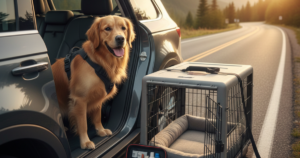
Dog Travel by Car: Guide to Long-Distance Road Trips
When you open the car door and your dog jumps in with bright eyes, the excitement of a long road trip usually begins. But the real preparation starts long before the engine starts. A long drive needs structure because many small problems can come up during extended car travel with dogs.
Let your dog walk and relax before driving to help settle their energy. Use a strong harness or a secure crate to keep your dog safely positioned during the drive. This helps you stay calm and focused on the road. Stop every so often during the trip for water, stretching, and bathroom breaks.
When traveling in summer, extra caution is essential. Keep your dog away from heat, strong sunlight, and warm seats. Motion sickness is common, so if your dog seems unwell, follow your vet’s advice. Driving slowly through quiet areas matters most for night travel. With proper planning, a long road trip with a dog can be peaceful and enjoyable for both of you.
Flying with a Dog (In the US and Abroad)
You stand at the airport entrance with your dog beside you. You are both nervous and excited. Your dog notices the change and looks up with interest. Flying together can be a great experience, but it requires calm, careful planning with the right dog travel essentials. Every airline has strict rules, so preparing in advance helps your dog feel safe and settled during the flight. If your dog tends to sneeze more during stressful situations like travel, our guide on why your dog is sneezing so much explains how anxiety and environmental changes can sometimes trigger this symptom.
General Rules for Airlines
Airlines maintain strict pet policies because safety is their top priority. Most airlines allow dogs to fly either in the cabin or in the cargo hold, depending on size and weight. Both options require an approved carrier. According to IATA live animal regulations, airlines follow standardized international guidelines for live animal transport, though individual carrier policies on food, water, and carrier specifications can still vary—always confirm details directly before booking.
Required Documents
You need the right paperwork to fly with pets. Wondering where to get a health certificate for pet travel? You need a current health certificate from a licensed vet. Keep your vaccination records up to date and easily accessible. Some airlines also require a fit-to-fly certificate confirming your dog is healthy enough for the journey.
How to Get Your Dog Ready
Before a flight, your dog needs gradual, gentle preparation. Short periods in the crate help your dog feel safe in a confined space—the same patient, gradual approach used in crate training applies directly here. Use calm routines in the days leading up to travel to help your dog relax. Stick to a light feeding schedule to avoid discomfort during the flight. Building comfort with handling — including paws and nails — also helps reduce overall stress before travel. Our guide on how to trim your dog’s nails safely covers gentle handling techniques that translate well to pre-travel preparation.
Rules for Traveling Abroad
International travel involves more paperwork and stricter checks. Your dog needs a microchip that meets international pet travel standards. Some countries require a rabies titer test for entry. When all paperwork is accurate and ready in advance, customs clearance goes far more smoothly.
Taking the Train or Bus with Dogs
Know in advance what documents are required for pet travel by train or bus, since rules differ significantly between countries. In the US and Europe, dogs are generally allowed on trains as long as they follow specific guidelines. Most regular train travelers understand the basics of pet safety on board.
Some rail systems require a carrier, while others allow leashed dogs as long as they remain calm. In India, dogs are typically only allowed in certain train cars, and owners must follow booking rules to ensure safety and adequate space for everyone. Private buses are often the most restrictive — many do not allow pets at all, and some only permit them in secure crates.
Staying in Hotels with Dogs
Staying in hotels with dogs can be enjoyable, but it requires some planning. Most pet-friendly hotels have simple rules designed to keep everyone comfortable. Always inform the hotel before arrival, especially when bringing a pet, so they can prepare the room appropriately.
Bring familiar items like a mat, toys, wipes, and food to help the space feel comfortable for your dog. These travel essentials help your pet feel more secure in an unfamiliar environment.
Be mindful of barking, as it can disturb other guests. A short walk before entering the hotel helps calm your dog and release excess energy. Stick to a consistent bathroom schedule to avoid confusion in a new location. Always clean up after potty breaks in designated areas. Keep the room tidy and avoid any damage to hotel property. Following these simple guidelines makes your stay peaceful and stress-free for everyone.
Safety Tips Every Dog Owner Should Follow
When you know your dog is safe, every trip feels calmer. Many dog owners only learn essential pet travel safety rules after something frightening happens during a trip—an overheated car, a slipped leash, or a dangerous snack. These moments are reminders that safety should always come first when traveling with a dog. Simple habits and advance planning keep your dog protected in nearly any situation.
Tip 1: Never leave your dog in a parked car. Temperatures inside a parked car rise dangerously fast. Even a few minutes can become life-threatening. Always bring your dog with you or ensure they remain in a shaded, well-ventilated space.
Tip 2: Stay hydrated and keep your dog cool. Offer water regularly throughout the trip. Take breaks in shaded areas to cool down when needed. Heavy panting is an early sign of heatstroke; keeping your dog well-hydrated helps prevent this.
Tip 3: Always use the right safety gear. Use a strong leash in public spaces at all times. During longer trips, secure your dog in a crate or harness. Proper safety gear prevents sudden jumps or slips and keeps your dog comfortable and secure throughout the journey.
Tip 4: Stay alert to hazards around you. Keep your dog away from chocolate, sharp objects, and toxic plants. Scan your surroundings before settling into any new space — an important pet relocation habit. Keep food out of reach and bags securely closed to prevent accidental ingestion of something harmful.
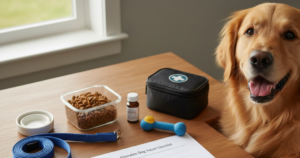
Things to Avoid When Traveling with a Dog
Most dog travel problems do not happen because of bad luck — they happen because of small mistakes made in a hurry. Overfeeding, choosing the wrong carrier, or skipping basic planning can quickly turn a simple trip into a stressful one. Knowing these common mistakes beforehand makes traveling with your dog safer, calmer, and more comfortable for both of you.
1. Too Much Food Before Traveling: Feeding your dog a full meal right before departure can make them feel sick. Dogs may experience bloating or nausea during travel. Stick to small meals and light snacks instead. A steady, predictable feeding routine, much like the one covered in our dog nutrition guide, helps your dog stay calm and avoid digestive discomfort before and during a trip.
2. Using the Wrong Size Carrier: A carrier that is too small restricts movement and causes stress. One that is too large allows your dog to slide around during transit. Always use a size approved by the airline or transport operator, and make sure your dog can sit, stand, and turn around comfortably.
3. Not Making Regular Stops on Long Trips: Long drives require regular bathroom and stretch breaks. Skipping stops causes discomfort and anxiety. Plan breaks every two to three hours during your trip. Short walks and consistent water access keep your dog healthy throughout.
4. Losing ID Tags or Microchips: ID tags and microchips are critical if your dog ever becomes lost. Without them, finding a lost pet becomes significantly harder. Ensure your tags contain current contact information, and keep collars visible at all times during travel.
5. Not Following Airline Rules: Every airline has strict policies for pets, whether in the cabin or cargo hold. Failing to review these rules can lead to boarding denial or last-minute stress. Read the airline’s pet policy thoroughly before booking, and prepare the correct carrier and documentation in advance.
6. Packing Important Items at the Last Minute: Last-minute packing increases the risk of forgetting essential items. Food, water, a leash, a first-aid kit, and comfort items are all important. Keep everything organized in a dedicated dog travel bag, and confirm everything is ready well before departure.
7. Not Preparing for Motion Sickness or Stress: Long trips can leave dogs feeling nervous or unwell. Ignoring this can make travel uncomfortable or even risky. Talk to your vet about appropriate motion sickness remedies and calming strategies. Bring familiar toys and blankets to help reduce stress throughout the journey. If your dog has any underlying health conditions, it’s worth reviewing our guide on common dog health problems before a long trip, since certain conditions may need extra precautions while traveling.
Printable Dog Travel Checklist
When packing for your dog, it is easy to miss small but important details. A simple checklist keeps everything organized and helps you travel without last-minute stress.
Dog Travel Essentials Checklist
- Food and clean drinking water
- Leash, collar, and harness
- Health certificate and vaccination records
- Airline-approved carrier or travel crate
- First-aid kit and medications
- Comfort items like a blanket or toy
The night before you leave, you sit on the floor with your dog and all of your bags, papers, and toys. You notice small things — the vet papers, food bowls, blankets, and leash, all waiting to be packed. Your dog nudges the travel bag as if to say, “Get ready.” If you forget something, trips with dogs can quickly feel overwhelming. A clear dog travel checklist makes planning easier, lowers stress, and ensures your dog stays safe and happy throughout the journey.
Before You Travel
- Get your dog a full health check-up.
- Make sure all vaccinations are current.
- Obtain a health certificate confirming fitness to travel.
- Confirm reservations for flights, trains, or hotels.
- Update microchip and ID tag information.
- Prepare international travel documents if required.
What to Pack
- Food for the entire trip.
- Foldable food and water bowls.
- Collar, leash, and harness.
- An airline-approved travel crate or carrier.
- Favorite toys, bed, and blanket.
- Grooming wipes, a towel, and other comfort items.
- Safety items, including a first-aid kit and motion sickness medication.
In Case of an Emergency
- Keep a first-aid kit for pets and extra medication on hand.
- Have your vet’s phone number and the nearest animal hospital’s address ready.
- Carry copies of vaccination records and the health certificate.
- Keep travel insurance information accessible, if applicable.
- Pack extra snacks and water for unexpected delays.
- Bring portable potty pads for emergencies.
Dog Travel FAQs
When you travel with a dog, questions naturally come to mind. Papers, health checks, rules—everything feels important because your dog depends on you. These common dog travel questions come from real situations pet parents face before and during trips. Clear answers make planning easier and help you travel with confidence.
FAQ 1 — What papers do I need to take my dog on a trip?
Ans: You need a vaccination record, a health certificate, and proper identification such as a microchip or ID tag.
FAQ 2 — What do I need to do to get a health certificate for my pet to travel?
Ans: Visit a licensed vet for a check-up and the necessary paperwork. The vet confirms your dog is fit to travel and issues the official certificate.
FAQ 3 — Which airlines let dogs ride in the cabin?
Ans: Many airlines allow small dogs in the cabin, depending on weight limits and carrier size. Always confirm policies directly with the airline before booking.
FAQ 4 — How do I keep a dog calm during long-distance travel?
Ans: Use short training sessions before the trip, bring familiar toys, take regular breaks, and feed lightly before departure.
FAQ 5 — How do I take a dog on an international trip?
Ans: Follow the destination country’s specific requirements for microchipping, rabies titer tests, and documentation. Researching these rules early prevents delays.
FAQ 6 — What size crate is allowed on a plane?
Ans: Use a crate approved by the airline that gives your dog enough room to stand, turn, and lie down comfortably.
FAQ 7 — Is it safe for dogs to fly in the cargo area?
Ans: It is generally safe when airlines follow proper climate control, weather guidelines and your dog has been gradually prepared through crate training.
FAQ 8 — What should you bring for a dog on a road trip?
Ans: Bring food, water, toys, a leash, first-aid supplies, and safety gear such as a harness or secure crate.
FAQ 9 — How long can a dog comfortably stay in a car?
Ans: Most dogs need a break for water, stretching, and a bathroom stop every two to three hours.
FAQ 10 — How do I handle dog motion sickness?
Ans: Use vet-approved medication if needed, feed lightly before travel, and ensure good ventilation throughout the journey.
Travel Safely and Happily
The car hums along, and your dog sticks its head out the window, ears flapping in the wind. You smile at your beloved companion and recognize that all the preparation was worthwhile. Your dog is calm and happy because you packed everything, checked their health, and made sure they were comfortable.
When you travel with your dog, many small things bring genuine joy — a paw resting on your lap, curious sniffing at new places, or a wagging tail at every stop. Use this dog travel guide to plan, pack wisely, and travel responsibly. Each adventure strengthens trust, creates happy memories, and deepens the bond with your loyal companion.

Hi, I’m Emily! As a certified canine behaviorist and proud dog mom based in Colorado, my goal is simple: to help you and your pup live a happy, balanced life together.
With over a decade of hands-on experience in positive reinforcement and pet nutrition, I share practical, science-backed advice that actually works in the real world. When I’m not writing, you’ll usually find me exploring mountain trails with my two rescue dogs, Max and Luna.