Flying with dogs internationally takes a lot of planning and preparation. Every country has different rules for bringing pets across borders, and airlines also follow strict safety policies. If you miss even one requirement, your flight may get delayed or you could be denied boarding at the airport. That’s why it’s always smart to start preparing early.
This guide makes international dog travel simple to understand. You’ll learn the most important rules, documents, and health requirements needed to fly with a dog abroad. You’ll also understand common airline policies, including cabin vs cargo rules, so you can travel confidently and avoid last-minute surprises.
👉 Quick Guide for Dog Owners
- 1 Understanding the Rules for Travelling with Dogs Abroad
- 2 Documents Needed to Fly with a Dog Internationally
- 3 Health Checks and Vaccination Requirements
- 4 International Guidelines for Airline Pet Policy
- 5 Dog Flight Rules for Flying with Dogs Internationally: Cabin vs. Cargo
- 6 Getting Your Dog Ready to Fly Internationally
- 7 Conclusion: Travelling the World with Care and Confidence
Understanding the Rules for Travelling with Dogs Abroad
The rules for travelling with dogs internationally (or international dog travel) are different in each country. Every country has its laws about the health and safety of animals. Some countries let dogs in with just a simple health certificate from a vet. These papers prove that the dog is healthy enough to travel. Other countries want you to get permission to bring things into their country before you arrive. Government agencies that oversee animal health often issue these permits. It can take weeks or even months to process permits.
One of the main goals of international pet travel rules around the world is to stop rabies. Many countries require proof of a valid rabies vaccination. Some places also need tests for rabies antibodies. These tests show that the vaccine works before you get in. If you don’t have the right rabies requirements, you may have to stay in quarantine or be turned away. Timing is crucial for the rules about rabies.
In most parts of the world, microchipping is required for flying with dogs internationally. The microchip must meet international ISO standards. Without the right microchip identification, vaccinations don’t count. Some countries also have rules about certain breeds. Some breeds are not allowed or need special permission. Climate rules also affect whether or not dogs can come in. In the summer, hot places make it difficult to travel.
Some places make you stay in quarantine when you arrive there. How long someone has to stay in quarantine depends on how well they obey the rules. Fully compliant dogs may not have to go into quarantine at all. These rules keep people and animals safe in the area. Understanding things early on lowers stress and delays that come out of nowhere. Planning makes sure that international dog travel goes smoothly and safely.
Documents Needed to Fly with a Dog Internationally
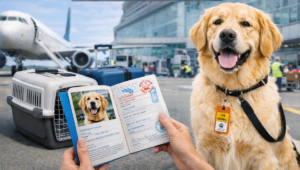
When flying with dogs internationally, or planning international travel with a dog, it’s important to fill out the right forms. Before leaving, most countries need more than one verified document. These papers prove your dog’s identity and health. Before letting pets on board, airlines also check the paperwork. Missing papers are a common reason for last-minute travel denial. Always check with official sources to make sure you meet the requirements before booking a flight.
Important Papers Table
| Document Name | Purpose | Issuing Authority |
| Pet Passport | Identity and vaccination record | Authorized veterinarian |
| Health Certificate | Confirms dog’s fitness to travel | Government-approved vet |
| Rabies Vaccination Proof | Disease prevention compliance | Licensed veterinarian |
| Microchip Certificate | Permanent dog identification | Veterinary clinic |
| Import Permit | Legal entry permission | Destination country authority |
| Parasite Treatment Proof | Prevents disease spread | Authorized veterinarian |
Health Checks and Vaccination Requirements
Health checks are a very important part of international dog flight requirements. Before leaving, most countries require a recent visit to the vet. The health check shows that the dog is healthy enough to travel. Airlines also need this certification to prove that their planes are safe. Dogs that show signs of illness are often not allowed to board. Getting a rabies shot is required in almost every country you visit. The vaccine must be given at the right time and to the right age group. Rabies antibody titre tests are required in some countries.
These tests show that the vaccine worked well. You often need to plan titre tests months in advance. People often need parasite treatments before they travel, too. These include treatments for worms, fleas, and ticks. Some places tell you when you need to get treatment before you arrive. For every vaccination and medical test, timing is important. Not meeting deadlines can mean that you can’t go on your trip at all. Always talk to a vet who has experience with pet travel early on. Early advice helps you avoid expensive mistakes and delays in your trip.
International Guidelines for Airline Pet Policy
Each airline has its own rules for pets on international flights, especially for international dog travel. Different types of planes and routes have different policies. Some airlines let dogs in the cabin, but only if they are under a certain weight. The weight of the carrier is usually included in cabin travel. Some airlines only let pets travel in cargo holds. Cargo travel uses compartments that are climate-controlled and pressurised. The size of the breed often decides where it goes.
Usually, bigger dogs ride in cargo areas. Breeds with short noses may have to follow more rules. These breeds could have trouble breathing while flying. Airlines always put the safety of animals first on every trip. Temperature heavily influences travel approval decisions. Some types of planes can’t safely carry animals. For every flight, airlines need to know ahead of time that you want to bring your pet. There aren’t many pet spaces, and they fill up fast. Requests made at the last minute are often turned down. Knowing the rules of the airline can help you avoid bad surprises at the airport. Booking early greatly increases the chances of getting approved.
Dog Flight Rules for Flying with Dogs Internationally: Cabin vs. Cargo
| Feature | Cabin Travel | Cargo Travel |
| Dog Size | Small dogs only | Medium and large dogs |
| Weight Limit | Usually 8–10 kg with carrier | No strict limit, breed dependent |
| Dog Location | Under the seat | Climate-controlled cargo hold |
| Stress Level | Lower for anxious dogs | Higher for nervous dogs |
| Owner Access | Dog stays with owner | No access during flight |
| Safety Monitoring | Cabin pressure controlled | Temperature and pressure monitored |
| Breed Restrictions | Fewer restrictions | Short-nosed breeds often restricted |
| Crate Requirement | Soft or hard carrier | IATA-approved hard crate |
| Comfort Level | Familiar presence helps | Depends on training and temperament |
| Approval Process | Limited cabin slots | Subject to aircraft type |
| Best For | Calm, small companion dogs | Large or working breeds |
Getting Your Dog Ready to Fly Internationally
Getting ready the right way is a big part of flying with dogs internationally and travelling with dogs safely around the world. Dogs get stressed out easily when they are in new situations, like when they fly. At least three to four weeks before you leave, start crate training. Your dog will feel safer on long trips if they have a crate they know. Let your dog spend some time in the crate every day. This makes you feel better and less anxious. The crate must be the right size and have enough air flow for the airline. Inside, your dog should be able to stand, sit, and turn easily. Give your dog a lot of exercise before you leave. Light exercise can help you calm down.
Don’t eat a lot of food right before you leave. If you feed your pet too late, they might get sick on the plane. Give people access to water before and after they check in. Don’t drink too much water before getting on board. Put clear labels on the crate. Please include your contact information and the address of your destination.
Conclusion: Travelling the World with Care and Confidence
With the right planning, flying with dogs internationally becomes much easier and safer. It’s important to know the rules for travelling with dogs internationally. Following the rules for flying with dogs set by international airlines keeps everyone safe. Filling out the right paperwork to fly with a dog will keep you from being late. Understanding each airline’s pet policy for international travel builds trust. Getting ready keeps your dog healthy and comfortable. Planning ahead makes travelling abroad easy and stress-free. You can take your dog anywhere in the world without worrying about its safety.