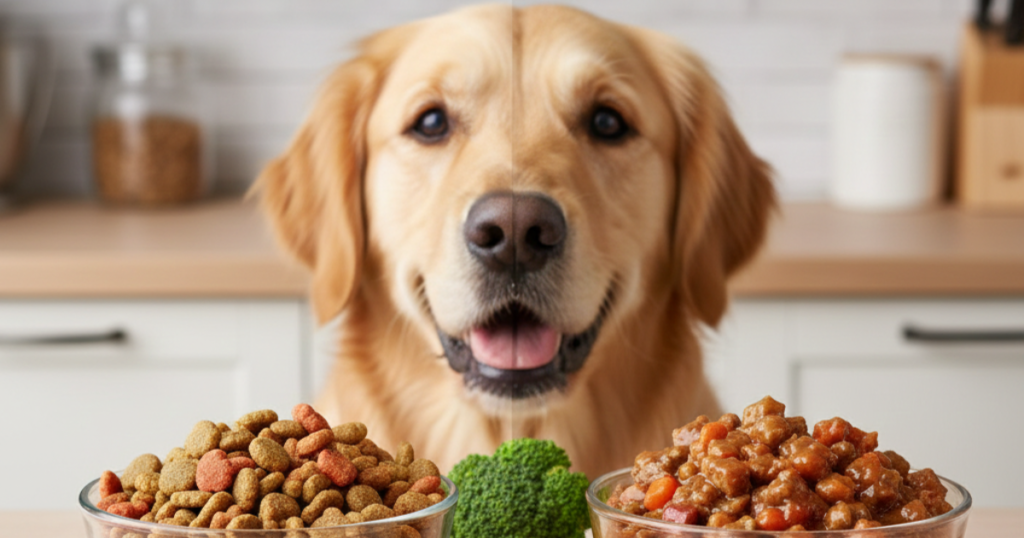
Once, I stood in a busy pet store and looked at shelves full of food. My dog Luna sat next to me, looking up at me with her soft, hopeful eyes, waiting for me to pick something good. I was confused because every pack said it had the “best nutrition,” but none of them told me what she really needed.
A healthy diet supports smooth digestion, strong immunity, steady energy, and long-term physical and mental balance throughout a dog’s life. It fuels daily play, supports activity, and helps dogs stay calm, active, and healthy as they grow.
This dog nutrition guide explains daily feeding needs, balanced diets, common health issues, and age-wise nutrition for puppies, adult dogs, and seniors. If you are also looking for a full picture of your dog’s daily care, not just food, our complete dog health care guide covers vaccines, diseases, and daily health checks in detail.
Learning the Basics of Dog Nutrition
Dog nutrition, also known as canine nutrition, is the practice of feeding dogs a balanced diet that includes protein, fats, carbohydrates, fiber, vitamins, and minerals. The right nutrition supports digestion, energy levels, immunity, healthy weight, and long-term wellbeing, based on a dog’s age, size, and activity level.
After getting a new diet, Max, my neighbor’s sweet beagle, changed almost overnight. His tail wagged less, and the walks seemed to take a long time. He looked tired, and his mood dropped. That moment made me realise how much food affects a dog’s strength, energy, and happiness. Dogs can’t talk, but their bodies tell us everything with small changes.
Dogs need six important nutrients to stay healthy: protein, fat, carbs, fiber, vitamins, and minerals. Each nutrient has a specific job in your dog’s body. Protein helps muscles grow and fixes small damage that happens every day. Fats help the brain and keep joints moving well.
Carbs give dogs steady energy for playtime and daily walks. To keep their bones and muscles healthy, big dogs need a steady supply of calories. Because their metabolisms are fast, small breeds need meals that are high in energy. The right balance keeps all dogs healthy, happy, and active.
Dog Nutrition Basics — Quick Table
| Nutrient | Main Role in Body | Best Sources |
|---|---|---|
| Protein | Builds muscles, repairs tissues | Chicken, turkey, fish, eggs |
| Fats | Supports the brain, boosts joints | Salmon oil, chicken fat, flaxseed |
| Carbs | Gives steady daily energy | Brown rice, oats, sweet potatoes |
| Fiber | Supports digestion and stool health | Pumpkin, veggies, oats |
| Vitamins | Boosts immunity and skin health | Fruits, veggies, fortified kibble |
| Minerals | Supports bones, organs, nerves | Meat, bone meal, balanced diets |
Important Points from the EU (FEDIAF) Dog Nutrition Guide
Nutrition standards set by FEDIAF (EU) and AAFCO (USA) help ensure dog food is complete, balanced, and suitable for long-term health across all life stages.
How Much Food Should You Give Your Dog?
It was constantly difficult for me to feed Luna till I learnt that dogs eat depending on their weight and age. When I learnt the rules about weight, her meals finally made sense. Her coat looked brighter, she had more energy, and feeding time was calm again.
Eating too much makes you gain weight quickly. Not eating enough makes your bones and immune system weaker. A balanced dog weight management diet will keep your dog happy, active, and calm. This section works as a practical dog feeding chart to help owners avoid overfeeding or underfeeding.
Dog Feeding Chart by Weight
| Dog Weight | Daily Food Amount |
|---|---|
| 5–10 lbs | ½ to 1 cup |
| 10–25 lbs | 1 to 2 cups |
| 25–50 lbs | 2 to 3 cups |
| 50–75 lbs | 3 to 4 cups |
| 75+ lbs | 4 to 5 cups |
Note: These are general guidelines for dry kibble. Always check the feeding instructions on your specific dog food packaging, as calorie density varies by brand.
Puppies need to eat more often because their bodies grow so quickly. They use up energy quickly and need a steady supply of fuel all day.
Adult dogs need to eat the same amount of food every day to maintain their weight and muscle.
Older dogs don’t need as many calories, but they do need more nutrients for their joints and digestion.
No two dogs are the same. Keep an eye on the quality of your stool, your energy levels, and the shape of your body. These little signs tell you if the portions need to be changed a little bit. If your dog suddenly stops eating or loses interest in food, read our guide on how long a dog can go without eating to know when it becomes a concern.
Different Types of Balanced Dog Diets
It can be hard to choose a balanced dog diet because there are so many good ones. Some meals made her hyper, while others made her sleepy. Every dog reacts differently, so it’s important to know how each diet works.
Dry Kibble Diet: Pros and Cons
In both the US and the EU, dry kibble is the most common food. The ease of keeping and using this food has led several dog owners to choose it. Properly made kibble supports dental health and provides convenient, balanced daily nutrition.
Pros: User-friendly, long shelf life, good nutrient balance, supports dental hygiene.
Cons: Lower moisture content, may not suit dogs that struggle with hydration.
The top-quality kibble must adhere to AAFCO or FEDIAF standards and must list a real meat source first in the ingredients. Choose formulas with fewer fillers and pure, recognizable ingredients. Not sure which to pick? Our detailed dry food vs wet food comparison breaks down the differences so you can decide what suits your dog best.
Wet Dog Food: Benefits and When to Use It
Wet food tastes better and is softer, and a lot of picky dogs love it. It also works well for older dogs who have trouble chewing hard kibble. Wet food is helpful when your dog is sick, recovering, or just doesn’t want to eat dry food. It keeps dogs hydrated and adds variety to daily meals.
A Diet of Fresh Food
In recent years, fresh dog food has become popular, with brands like Nom Nom and The Farmer’s Dog leading the way. These meals are made with human-grade ingredients and cooked gently to preserve nutrients. Fresh food is especially good for dogs with allergies, digestive problems, or dull coats.
The BARF Diet (Raw Diet)
Many dog owners who want unprocessed, natural food choose raw diets. The benefits include shiny coats, strong muscles, and firmer stools. The downsides are a higher risk of bacterial contamination and more preparation time.
When following a BARF diet for dogs, food safety must be the highest priority, particularly important in regions with strict hygiene regulations. Always use fresh meat from a clean source, prepare it safely, and never feed cooked or sharp bones. A vet or canine nutritionist should help you build a balanced raw diet that includes organs, bones, and vegetables.
Diet Made at Home
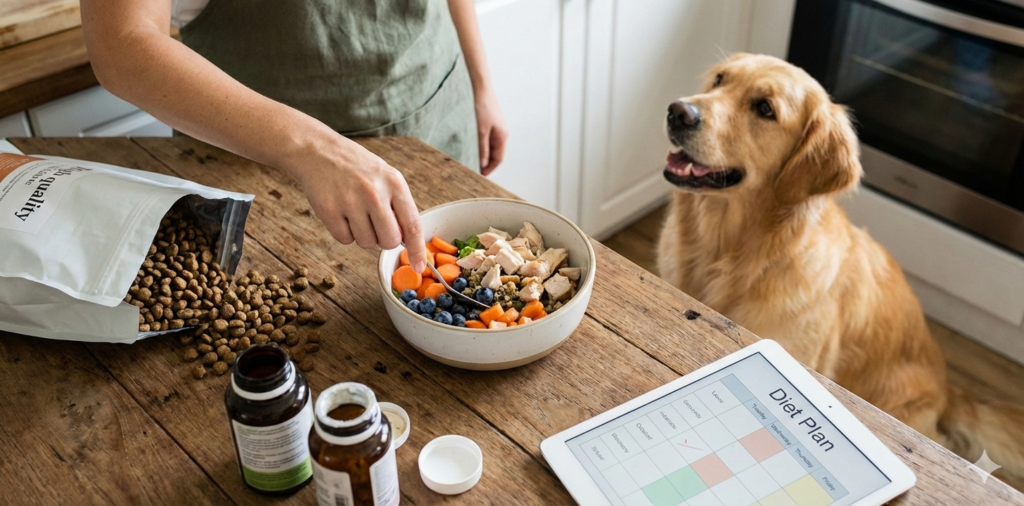
When you cook food yourself, it feels like love. Many pet parents choose it for sensitive dogs or those who need simple, limited ingredients. It is critical to use vet-approved recipes because homemade meals can easily miss important nutrients. Adding supplements like calcium and ensuring the right balance of protein, carbs, and fats are essential steps. With the right guidance, making meals at home can keep your dog happy, healthy, and safe. See the section below on Homemade Dog Food: Benefits, Risks & Planning for a full breakdown.

Dog Food Recommendations by Life Stage and Health Needs
| Life Stage | Health Need | Recommended Food |
|---|---|---|
| Puppy | Sensitive Stomach | Single-protein kibble, puppy-formulated fresh food |
| Puppy | Skin Health | Mild, DHA-enriched puppy diets |
| Puppy | Joints | Puppy kibble with glucosamine |
| Puppy | Energy / High Activity | High protein & fat meals for growth and play |
| Adult | Sensitive Stomach | Limited-ingredient adult kibble, cooked proteins |
| Adult | Skin Allergies | Omega-rich diets, salmon or fish oils |
| Adult | Joints | Glucosamine-enriched adult formulas |
| Adult | Weight Control | Low-calorie, high-fiber kibble |
| Adult | High-Energy Breeds | Adult formulas with slightly higher protein and fat |
| Senior | Sensitive Stomach | Easily digestible senior food or fresh diets |
| Senior | Skin Allergies | Omega-rich senior diets to reduce dryness and irritation |
| Senior | Joints | Glucosamine, chondroitin, and omega oils |
| Senior | Weight Control | Low-fat, high-fiber senior meals |
| Senior | Energy / Muscle Maintenance | Moderate protein to maintain muscle without overloading calories |
The Best Dog Foods for Various Health Issues
Choosing the right diet based on health conditions is a key part of dog’s dietary needs. Each dog has its own needs – some have digestive issues, others need more energy or joint support. The right food can truly change how happy and active your dog is.

Sensitive Stomach
If your dog has a sensitive stomach, they might vomit, have diarrhea, or experience gas. Diets with few ingredients work best because they reduce allergens. Fresh food or meals with just one protein source, like chicken or turkey, are easy on the stomach. Avoid overly rich sauces, heavy fillers, and artificial colors. Eating small, frequent meals can help keep the stomach calm and comfortable.
Skin Allergies
Dogs with itchy skin, red spots, or hot spots need extra dietary care. Foods or diets high in omega-3 and omega-6 oils, like salmon-based formulas, can improve coat shine and reduce inflammation. Grain-free diets can help, but only if your dog genuinely reacts to grains — don’t switch without a confirmed allergy. A healthy coat truly starts from the inside.
Joint Problems
Dogs with arthritis or aging joints need nutritional support. Look for kibble containing glucosamine, chondroitin, and quality omega-3 fatty acids. These nutrients strengthen cartilage, improve mobility, and reduce stiffness. If you have an older dog dealing with joint pain, our article on common dog health problems every owner should know covers what signs to watch for early on. Feeding smaller, more frequent meals also helps prevent the weight gain that puts extra strain on joints.
Weight Management
Overweight dogs are more likely to develop diabetes, heart problems, and joint pain. Low-calorie kibble with a high fiber content keeps them full while reducing excess calories. Measure portions carefully, and avoid giving table scraps. A controlled diet combined with regular daily exercise will help your dog lose weight safely and gradually. Keeping a healthy weight can add years to your dog’s life.
High-Energy Breeds
Working and sporting breeds like Border Collies and Huskies need more calories to stay active and focused. Diets higher in protein and healthy fats deliver sustained muscle energy and endurance. Plenty of quality protein helps these dogs perform their best during work, training, and play. For training-specific nutrition advice, check our dog training guide, which covers energy needs alongside behavioral guidance.
Weekly Samples of Dog Diet Plans
Dogs maintain good health, vibrant energy, and overall happiness when you follow a consistent meal plan. I remember planning Luna’s meals carefully and seeing her energy levels soar almost immediately. A well-organized plan makes feeding simple and efficient. Proper dog meal planning helps maintain digestion, energy, and long-term health.
Puppies
Rapidly developing puppies need to be fed more often than adults — three to four small meals daily. Make sure their diet is rich in quality protein sources such as chicken, turkey, or fish to strengthen muscles and support general growth. Food with DHA (found in good puppy kibble) is essential for healthy brain and eye development. A consistent puppy nutrition schedule helps keep their stomachs settled and energy steady.
Adult Dogs
Two balanced meals a day are ideal for adult dogs. Choose kibble with meat listed as the first ingredient and a solid protein content. Balanced meals help maintain healthy weight, muscle tone, and enough energy for daily walks or play. Sticking to a regular schedule prevents overeating and supports healthy digestion.
Senior Dogs
Senior dogs need meals that are lower in fat but higher in quality nutrients, as their metabolism slows down with age. Focus on easily digestible proteins to maintain muscle without causing digestive issues. Joint supplements like glucosamine or chondroitin help keep joints flexible as your dog ages. Smaller, more frequent meals may also help reduce bloating and keep energy levels steady throughout the day. For a deeper look at senior dog health risks, our common dog health problems explain what conditions become more likely with age.
Overweight Dogs
Owners of overweight dogs must be precise about portion control. High-fiber, low-calorie kibble keeps dogs full without extra calories. Eliminate table scraps completely- they can quietly undo all your efforts. Regular, measured meals combined with daily exercise or walking will gradually and safely reduce weight and improve mobility.
High-Energy Breeds
Working or sporting dogs need more protein and healthy fats to maintain energy during long walks, playtime, and mental stimulation. A small midday snack can help bridge the gap between meals. Consistent feeding times also support healthy digestion and stable energy throughout the day.
| Category | Safe Options | Notes / Caution |
|---|---|---|
| Fruits | Blueberries, apples, bananas | Remove seeds and pits from apples |
| Vegetables | Carrots, broccoli, pumpkin | Serve cooked or raw in small pieces |
| Proteins | Plain chicken, turkey, eggs | Cooked, unseasoned, no bones |
| Foods to Avoid | Chocolate, grapes, onions, garlic, xylitol, cooked bones | Toxic to dogs — always avoid completely |
For a more detailed breakdown of specific foods, check our individual guides: can dogs eat brown rice?, can dogs eat raspberries?, can dogs eat pumpkin?, and can dogs eat zucchini? — all part of Doggiezz’s growing food safety series.
What Dog Supplements Are Necessary and What Aren’t?
Some dogs may still need supplements even when eating a balanced diet. Supplements aren’t always necessary, but they can help with digestion, immunity, skin, joints, and overall health. Knowing what each supplement does helps you make a smart, targeted choice.
Multivitamins
Multivitamins are only helpful when a dog’s diet doesn’t include enough important nutrients. Meals made at home, or diets with very limited ingredients, may fall short of certain vitamins and minerals. Dog multivitamins can help fill these gaps and support immune function, bone health, and energy. Always consult your vet before starting any supplement to ensure correct dosing.
Omega-3 Oils
Omega-3 supplements are among the most well-supported additions for skin and joint health. Dogs with dry or itchy skin often respond well to the best omega-3 supplements for dogs, such as fish oil or flaxseed oil. These oils also maintain joint flexibility — particularly valuable for large breeds or aging dogs. Add them in the right amounts to avoid digestive issues. According to the National Institutes of Health, omega-3 fatty acids have well-documented anti-inflammatory benefits in mammals, supporting their use for dogs with joint and skin conditions.
Probiotics
Probiotics support digestion and the immune system by maintaining healthy gut bacteria. They are especially beneficial for dogs with diarrhea, sensitive stomachs, or those who have recently finished a course of antibiotics. Probiotics come in powders, chews, and yogurt-based drops, making them easy to add to daily meals.
Joint Supplements
Glucosamine and chondroitin are the most commonly recommended supplements for joint health, particularly in older or large-breed dogs. These compounds help maintain cartilage integrity and reduce stiffness. Regular supplementation is most effective for dogs with arthritis, hip dysplasia, or age-related joint issues. They typically come as tablets, soft chews, or powders mixed with food.
Gut Health Supplements
Prebiotics and digestive enzymes support better digestion for dogs with sensitive stomachs. Prebiotics feed the beneficial bacteria already living in your dog’s gut, while enzymes help break down proteins, fats, and carbohydrates more efficiently.
Food Intolerances and Allergies
I remember that my friend’s Labrador, Bella, constantly scratched herself and had recurring ear infections. We assumed it was seasonal at first. But when we visited a vet, it turned out to be a food allergy. Many dog owners don’t realize how common dog food allergies and intolerances are — they can affect dogs of any breed or age.
Common signs include itching, redness, ear infections, vomiting, diarrhea, low energy, a dull coat, or excessive licking. Identifying the trigger takes time but is critical for your dog’s long-term comfort.
Limited-ingredient or hypoallergenic diets with a single protein source are a proven approach. Always introduce new foods gradually over 7 to 10 days to monitor your dog’s reaction. Sudden changes can worsen symptoms or disrupt the digestive system. Most food allergies can be managed effectively with patience, careful food testing, and vet guidance.
Homemade Dog Food: Benefits, Risks & Planning
Watching your dog enjoy every bite of something you made yourself is incredibly rewarding. Many pet owners choose homemade meals for dogs with sensitivities or those who need clean, limited ingredients. But homemade dog food must be carefully balanced to meet all your dog’s nutritional needs — without a proper plan, dogs can develop deficiencies that cause serious long-term health issues.

Vet-Approved Recipes
Always follow vet-approved recipes to ensure your dog gets what they need. Chicken with rice and pumpkin is one of the most recommended combinations — easy to digest and excellent as the best dog food for a sensitive stomach. Turkey with oats and mixed vegetables is another solid option, providing protein, fiber, and essential nutrients. Using approved recipes significantly reduces the risk of nutritional gaps.
Add the Right Nutrients
Even well-prepared homemade meals often need supplementation. Calcium supports strong bones, omega oils improve skin and coat quality, and multivitamins fill in the gaps left by daily cooking. These additions help your dog grow strong, stay energetic, and avoid common deficiencies. Always ask your vet for correct dosing based on your dog’s size and age.
Portion Sizes
Portion control prevents both overweight and undernourishment. Use weight-based dog nutrition to determine the right daily amount. Monitor your dog’s stool quality, energy, and body condition regularly — these signals will tell you when adjustments are needed. Make any changes to recipes or portions gradually.
The Best Ingredients to Use
Choose natural, high-quality ingredients for the best results. Lean meats like chicken, turkey, and fish are high in protein and low in fat. Vegetables like spinach, carrots, and sweet potatoes provide fiber, vitamins, and minerals. Your dog’s digestive system generally handles simple, fresh foods better than heavily processed ones.
When and How to Feed Your Dog
Consistent feeding times are essential for a dog’s health, digestion, and energy. Two meals a day works well for most dogs — it keeps metabolism steady and prevents overeating. Puppies may need three to four smaller meals, while older dogs benefit from smaller, more nutrient-dense servings.
A morning and evening feeding schedule works well for most household routines and helps dogs recognize mealtimes, which naturally reduces begging and anxious behavior.
Free-feeding (leaving food out all day) is not recommended for most dogs, especially those prone to weight gain. Scheduled meals support healthy weight, encourage a routine, and prevent overeating.
When switching dog food, always transition gradually over seven days. Start by mixing a small amount of new food with the old, and increase the new food portion daily until the switch is complete. This prevents digestive upset, vomiting, or diarrhea and gives your dog’s gut time to adjust.
Common Dog Nutrition Mistakes to Avoid
Even experienced dog owners make small feeding mistakes that can affect digestion, weight, energy, and long-term health. Knowing what to avoid helps you keep your dog happy, healthy, and active.
Too Many Treats
Treats are an excellent training reward, but given too often they quietly add significant extra calories. Treats should make up no more than 10% of your dog’s daily caloric intake. Choose small pieces and opt for healthy, vet-approved options whenever possible. While training, keep treats tiny so you can use them frequently without overloading on calories — for more on this balance, see our dog training guide.
Random Homemade Recipes
Home-cooked food feels loving, but unverified recipes may lack essential nutrients. Dogs need a precise balance of protein, carbs, fats, vitamins, and minerals. Feeding unbalanced homemade food can lead to nutritional deficiencies, stunted growth, or a weakened immune system. Always use vet-approved homemade dog food recipes.
Sudden Food Changes
Switching food abruptly can cause stomach upset, vomiting, diarrhea, or gas. Always transition to new food gradually over 7 to 10 days, increasing the proportion of new food each day. This allows the digestive system to adjust comfortably.
Ignoring Dog Food Labels
Skipping the label means missing critical information about protein, fat, fiber, vitamins, and ingredient quality. Always look for AAFCO or FEDIAF certification to confirm the food is complete and balanced. Avoid foods with excessive fillers, artificial colors, or unrecognizable additives.
Feeding Toxic Human Foods
Some common human foods are dangerous for dogs. Chocolate, grapes, onions, garlic, xylitol, and cooked bones can cause serious illness or even death. Always verify before sharing human food, and make sure every family member knows which foods to keep away from the dog. Our article on can dogs eat marshmallows is a good example of why some “harmless-seeming” treats are actually dangerous.
Dog Nutrition FAQs
Q1: What is the best diet for dogs?
Ans: A balanced, complete diet that meets all of a dog’s nutritional needs is best. Look for foods approved by AAFCO (USA) or FEDIAF (EU) that provide the right amounts of protein, fat, fiber, vitamins, and minerals for your dog’s specific age.
Q2: How much food should I give my dog each day?
Ans: Daily food amount depends on your dog’s weight, age, and activity level. Refer to our dog feeding chart above. Adults do best with two meals, while puppies need three to four smaller meals. Senior dog nutrition requires fewer calories but more targeted nutrients.
Q3: What foods are toxic to dogs?
Ans: Chocolate, grapes, onions, garlic, xylitol, and cooked bones are all toxic to dogs and must never be given. Even small amounts can cause vomiting, diarrhea, or serious health emergencies.
Q4: Is homemade dog food healthier?
Ans: Homemade food can be healthier only when it is properly balanced. Use vet-approved recipes, add necessary supplements, and monitor your dog’s health regularly. Random or unbalanced homemade meals can cause deficiencies, slow growth, or immune weakness.
Q5: Are probiotics good for dogs?
Ans: Yes. Probiotics support gut health and immunity. They are especially beneficial for dogs with digestive issues, sensitive stomachs, or after antibiotic treatment. They come in powders, chews, or yogurt-based drops and can be added to daily meals.
Q6: Do dogs need vitamin supplements?
Ans: Only if the diet is nutritionally incomplete. Most quality commercial foods provide all required nutrients. Supplements like omega oils, glucosamine, or multivitamins can target specific needs — but always consult your vet before adding them.
Q7: Is grain-free dog food safe?
Ans: Grain-free diets are safe only for dogs with confirmed grain allergies or intolerances. Whole grains provide valuable fiber and energy for most healthy dogs. Do not switch to grain-free food without first consulting your vet.
Q8: What is the best diet for dogs with allergies?
Ans: Limited-ingredient or hypoallergenic diets with single protein sources work best. Introduce new foods gradually over 7 to 10 days and observe reactions. A proper vet-led food trial is the most reliable way to identify and manage food allergies.
Q9: Can dogs eat human food every day?
Ans: Some human foods are safe in small amounts, such as blueberries, plain cooked chicken, and carrots, for example. However, human food should never replace a balanced dog diet and must never include toxic items like onions, grapes, or chocolate.
Q10: How do I choose the right puppy food?
Ans: Choose puppy food approved by AAFCO for growth and development. Prioritize high-quality protein, DHA for brain and eye development, and fully balanced nutrients. Feed according to weight-based puppy feeding charts and adjust as your puppy grows.
A Healthy Diet Means a Happy, Healthy Dog
The food you give your dog is the single most powerful daily decision you make for their health. Each meal is a chance to improve your dog’s dog nutrition and support digestion, immunity, energy, and long-term happiness. When I started giving Luna balanced, high-quality meals, the difference was visible almost immediately, a shinier coat, brighter eyes, and more energy than ever before.
Long-term dog nutrition depends on consistent feeding schedules, nutritionally balanced dog diets, and careful portion control. Never change your dog’s diet abruptly, overfeed, or offer unsafe human foods. Treats are fine in moderation — just remember the 10% rule. Every small decision, from choosing the right kibble to adding the right dog supplements, genuinely adds up.
Caring for your dog’s canine nutrition is an act of love. It deepens your bond, builds trust, and gives your dog the best chance at a long, healthy, and joyful life. Whether you are planning meals for a puppy, an adult, or a senior dog, always pay attention to their age, activity level, and specific health needs. That is the simplest path to better dog nutrition and a healthier, happier dog every single day.

Hi, I’m Emily! As a certified canine behaviorist and proud dog mom based in Colorado, my goal is simple: to help you and your pup live a happy, balanced life together.
With over a decade of hands-on experience in positive reinforcement and pet nutrition, I share practical, science-backed advice that actually works in the real world. When I’m not writing, you’ll usually find me exploring mountain trails with my two rescue dogs, Max and Luna.