Are you curious about whether a dog can eat quinoa while you are cooking up a batch of this healthy dish for yourself? This super-nutritious seed has gained massive popularity as a smart, protein-packed addition to human salads and side dishes. But can dogs eat quinoa?
Yes, dogs can eat quinoa safely! In fact, quinoa is so highly nutritious that it is frequently used in premium commercial dog foods as a gluten-free alternative to wheat, corn, and rice. However, it must always be washed thoroughly, cooked completely plain, and served in strict moderation to avoid stomach upset.
In this comprehensive guide, we will explore the incredible health benefits of quinoa for dogs, a step-by-step plain cooking method, safe portion sizes, and how it stacks up against traditional white rice.
Is Quinoa Good for Dogs? (4 Amazing Benefits)
Yes, quinoa is excellent for your dog’s overall health. Unlike traditional grains, quinoa is technically a seed, making it a powerful, nutrient-dense addition to their diet.
Here are the key health benefits your dog can get from this superfood:
-
High-Quality Plant Protein: Quinoa is a complete protein, meaning it contains all nine essential amino acids. This helps support strong muscle development and repair for your furry friend.
-
Rich Source of Dietary Fiber: It contains a healthy amount of fiber, which helps regulate bowel movements, stops constipation, and significantly boosts gut health.
-
Packed with Essential Vitamins & Minerals: Quinoa is loaded with iron (which boosts red blood cells), calcium (for strong bones and teeth), magnesium, potassium, and Vitamin E to support a shiny, healthy coat.
-
100% Gluten-Free Alternative: If your dog suffers from grain allergies or sensitive skin due to wheat, corn, or gluten, quinoa serves as the perfect hypoallergenic alternative. It is a much safer energy source than processed human snacks like Cheerios, and can be mixed with safe fruits like raspberries for a healthy antioxidant boost.
How Much Quinoa Can a Dog Eat? (Portion Guide Table)
Even though quinoa is highly nutritious, it should only act as an occasional topper or supplement, never exceeding 10% of your dog’s daily calories.
Here is the recommended safe serving size based on your dog’s weight:
| Dog Size & Category | Safe Serving Size | Feeding Frequency |
| Small Dogs (Under 10 kg) | 1 – 2 Teaspoons (Cooked) | 1–2 times per week |
| Medium Dogs (10 to 25 kg) | 1 – 2 Tablespoons (Cooked) | 1–2 times per week |
| Large Dogs (25+ kg) | 2 – 3 Tablespoons (Cooked) | 1–2 times per week |
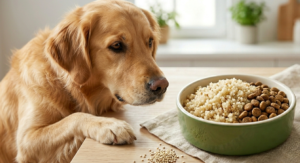
Quinoa vs Rice for Dogs: Which is Better?
When comparing quinoa with traditional rice, both are completely safe options for canines, but they serve entirely different dietary purposes:
-
Quinoa: It is much higher in protein, richer in antioxidants, and filled with diverse minerals. This makes it a far superior option for highly active dogs or pets needing a nutritional boost.
-
Rice: White rice is much lower in fiber, making it incredibly easy to digest. It remains the absolute best option for soothing an upset stomach or when a dog is put on a strict bland diet.
Can Dogs Eat Cooked Quinoa? (The Saponin Risk)
Yes, dogs can eat cooked quinoa, but they should never eat raw quinoa.
Raw quinoa seeds are coated with a natural chemical compound called saponin. In nature, saponin acts as a pest repellent for the plant. However, if consumed by a dog, saponin can cause severe irritation to the stomach and intestinal lining in dogs, leading to vomiting, drooling, or diarrhea.
Thankfully, cooking breaks down these compounds completely. To ensure absolute safety, always follow these cooking rules:
-
Rinse Thoroughly: Put the raw quinoa in a fine-mesh strainer and rinse it vigorously under cold running water to wash away the bitter saponin coating.
-
Boil Completely Plain: Cook the quinoa until it becomes light and fluffy. Never add salt, butter, garlic, onions, or cooking oil, as these ingredients can be highly toxic to your pet.
-
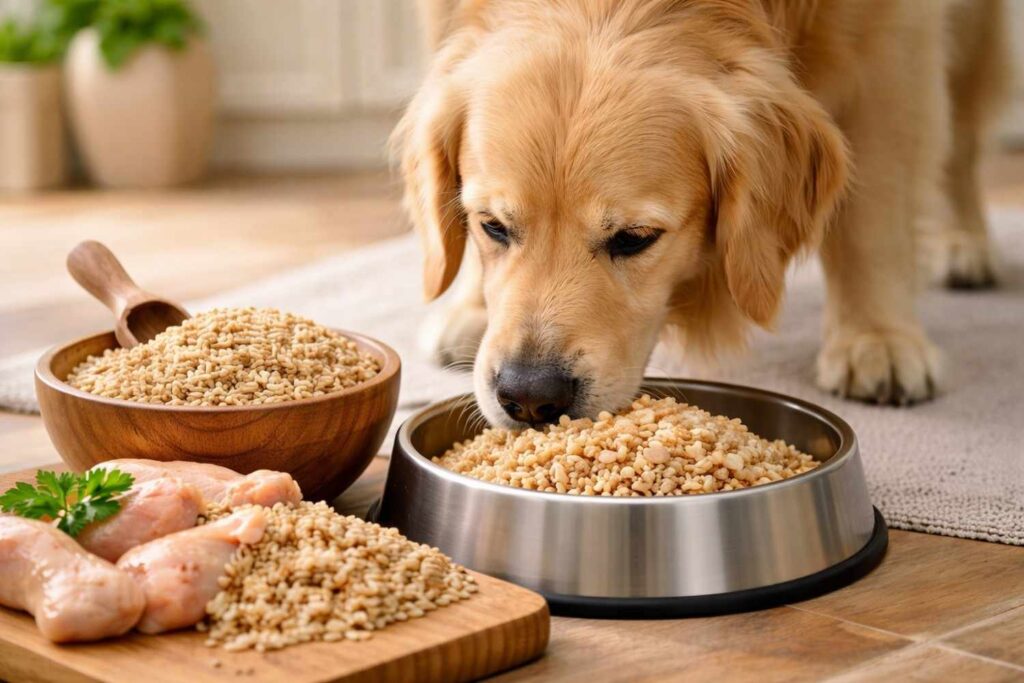
Cool & Mix: Let the cooked quinoa cool down completely to room temperature, then mix the recommended portion directly into your dog’s regular kibble.
Potential Dangers and Risks to Watch Out For
While this superfood is generally safe when cooked plain, introducing any new food to your dog’s diet carries minor risks. Unlike highly dangerous, sugar-loaded human treats like marshmallows, which should be completely avoided, quinoa’s risks are mostly limited to mild digestive adjustment.
-
Initial Digestive Issues: If you introduce quinoa too quickly or feed it in large amounts, it can trigger gas, bloating, or diarrhea, especially in dogs with sensitive stomachs.
-
Saponin Sensitivity: Even after thorough rinsing, a small number of dogs might remain highly sensitive to trace amounts of saponin, showing immediate signs of gut irritation.
-
Overfeeding: Quinoa is rich in complex carbohydrates. Overfeeding can lead to unwanted weight gain and a nutritional imbalance.
Always introduce quinoa slowly, starting with just a tiny pinch, and monitor your pet for 24 hours.
Final Thoughts
So, can dogs eat quinoa? Absolutely! When rinsed thoroughly and cooked completely plain, quinoa is an incredibly healthy, protein-rich treat that can give your dog’s daily meal a great nutritional upgrade. Just be sure to follow the recommended portion tables, introduce it slowly to avoid any stomach sensitivity, and consult your veterinarian if your dog has a history of chronic digestive issues.

Hi, I’m Emily! As a certified canine behaviorist and proud dog mom based in Colorado, my goal is simple: to help you and your pup live a happy, balanced life together.
With over a decade of hands-on experience in positive reinforcement and pet nutrition, I share practical, science-backed advice that actually works in the real world. When I’m not writing, you’ll usually find me exploring mountain trails with my two rescue dogs, Max and Luna.